
Generation 3 Pokémon Journey
Table of Contents:
- Introduction
- Hardware Options
- Connectivity between games
- Some new Generation Three mechanics
- My playthrough of Pokémon LeafGreen
- My playthrough of Pokémon Colosseum
- My playthrough of Pokémon Sapphire
- My playthrough of Pokémon XD: Gale of Darkness
- What is next?
Introduction
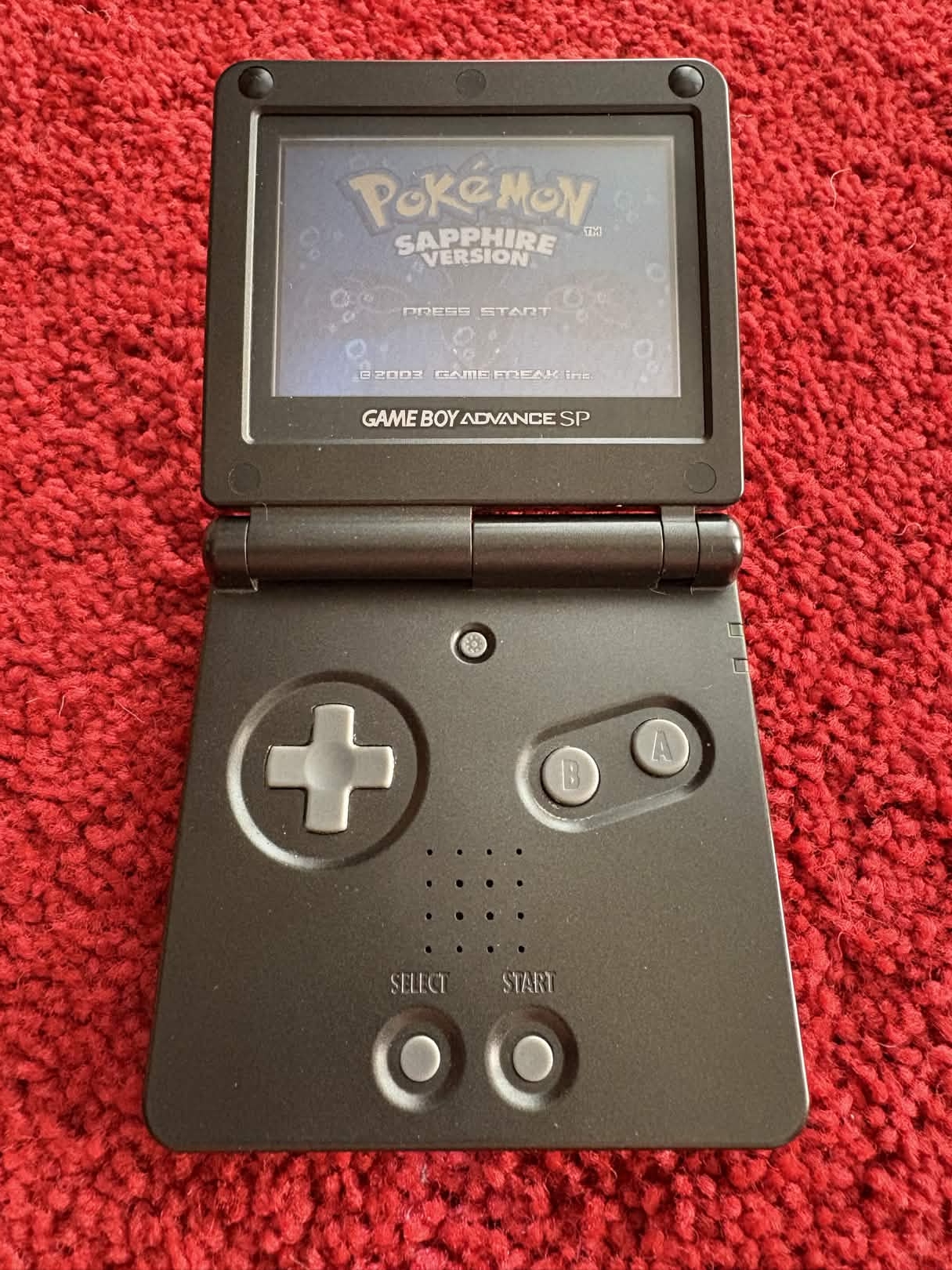
Generation three is the Game Boy Advance generation. There were five main series titles released altogether. The first two were Pokémon Ruby and Pokémon Sapphire. These were followed by an "enhanced" edition, Pokémon Emerald. This generation also includes Pokémon FireRed and Pokémon LeafGreen, which are remakes of generation one titles.
As they did in previous generations, Game Freak produced titles for the contemporary television console (in this case, the Nintendo GameCube) that provide tournament experiences in three-dimensional settings. These titles were Pokémon Colosseum and Pokémon XD: Gale of Darkness. These included some of the same features from the generation one and two Stadium titles, but they also included massive story modes and introduced the concept of purifying shadow Pokémon. The functionality of the Pokémon lab and Game Boy Tower in the Stadium titles were relegated to a separate release in generation three: Pokémon Box Ruby & Sapphire.
While the first Pokémon Ranger title, released for the Nintendo DS, is usually included in generation three, I discuss it on another page with the generation four releases, since it interacts with them.
Hardware Options
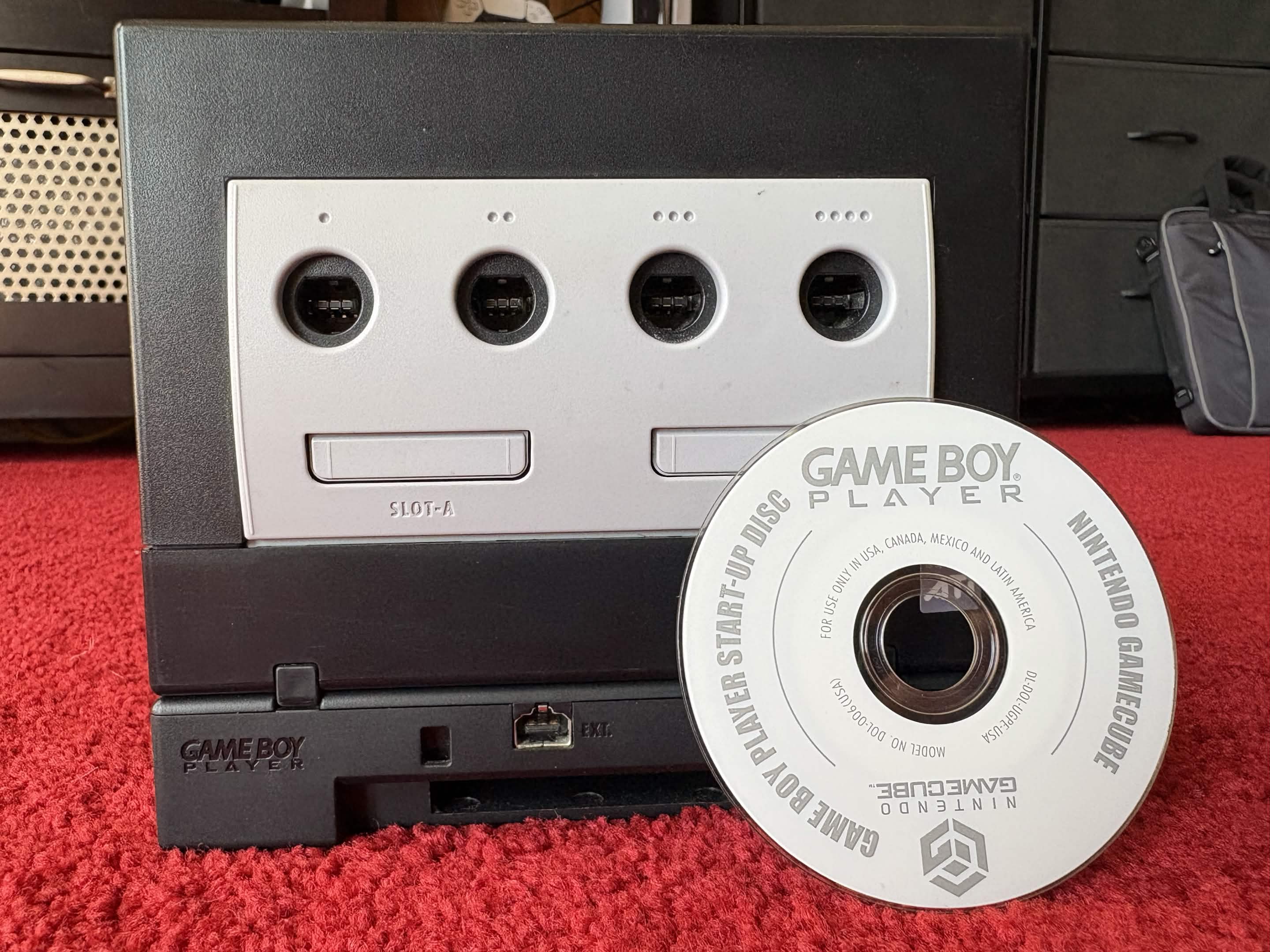
All five of the generation three main titles can be played on all three versions of the Game Boy Advance console (original, SP, and micro). As with generation one and two games, there is an adapter that allows the handheld titles to be played through a television set. This is the Game Boy Player, which is a physical addon to the bottom of the GameCube console that requires a Game Boy Player start-up disc to function. Please note that the GameCube console and the Game Boy Player disc are region locked. The physical Game Boy Player hardware attachment is not. The Game Boy Player features a port on the front just above the cartridge slot that accepts the various Game Boy link cables, allowing it to function like the handheld system and conduct trades as if it was a Game Boy Advance. Playing on these devices is the only way to trade between GBA games or interact with the GameCube support games. Game Boy Advance cartridges can also be inserted into the Nintendo DS and DS Lite for play, but these consoles are not compatible with GBA connectivity peripherals (the DS wireless functionality cannot be used by the GBA titles).
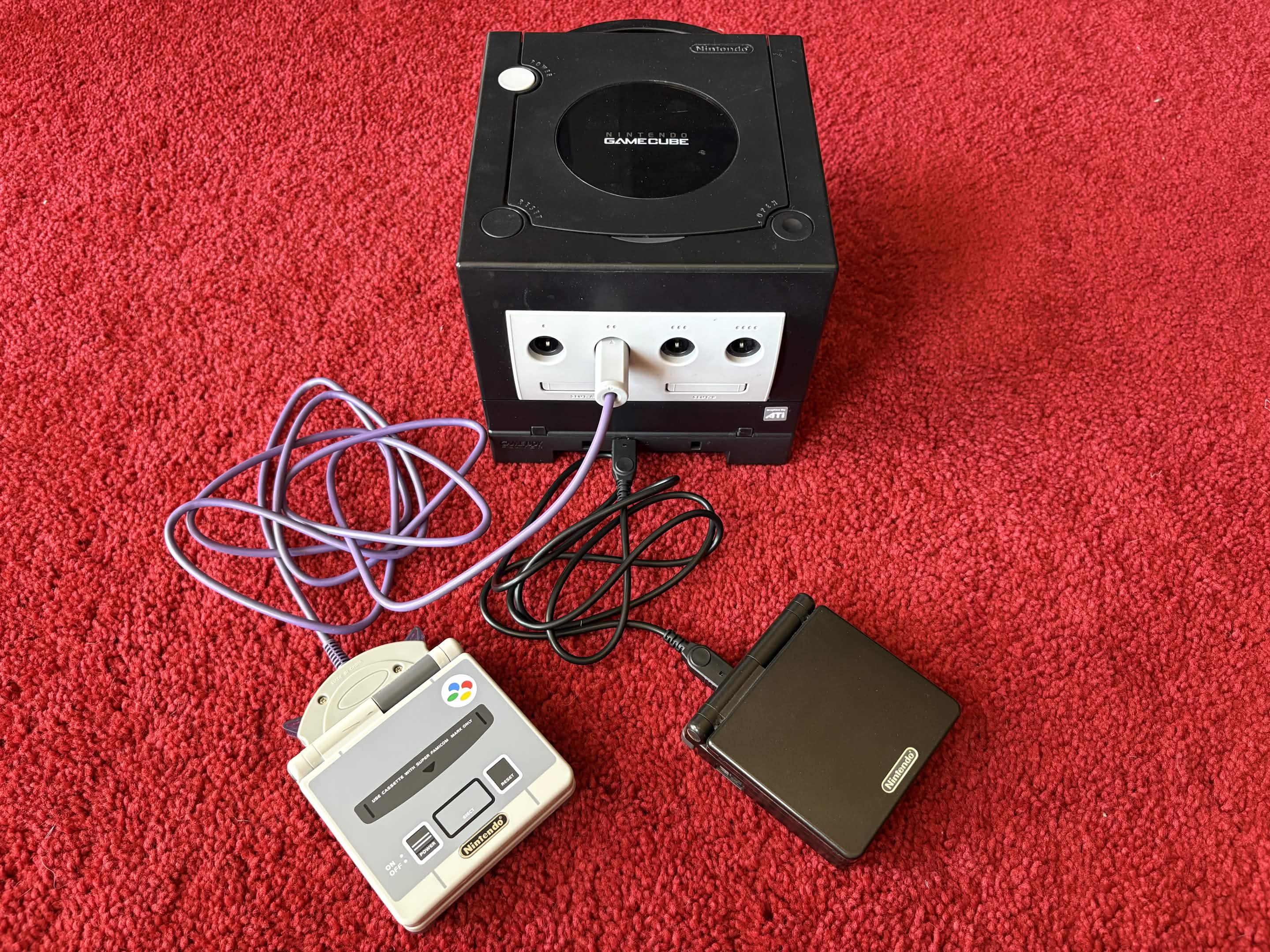
Trading between main titles as well as the GameCube titles requires the correct connectivity peripherals. Pokémon Ruby and Pokémon Sapphire are compatible with the Game Boy Advance Link cable (model AGB-005). The next two releases, Pokémon FireRed and Pokémon LeafGreen, were initially packaged together with a new Game Boy Advance wireless adapter, which could be used in place of the cable but only within a range of about three meters (~10 feet). While the physical GBA link cable also works with these two remakes, the two earlier releases (Ruby and Sapphire) are not compatible with the wireless adapter. Pokémon Emerald, the last of the five games to be released, is compatible with both the cable and the wireless adapter. Please note that the earlier link cables from the Game Boy and Game Boy Color era are not compatible with Game Boy Advance games. Finally, there is a second Game Boy Advance link cable (model DOL-011) with one male end that is compatible with a Nintendo GameCube controller port. This the cable can be used with both the Nintendo GameCube console and the Nintendo Wii console to connect all five main series titles to some of the GameCube titles.
One final piece of notable hardware produced during this era was the e-Reader accessory, which connected to the generation three titles and had a slot where special cards could be swiped to unlock various features in their associated games. These accessories were region locked, so you must obtain a North American e-Reader to scan North American cards using North American GBA cartridges. The same goes for their Japanese counterparts. The accessory was not very popular outside of Japan, so fewer cards were produced for non-Japanese versions. As with most collectibles that were not popular, they have become scarce and pricy. Some of the functions that e-Reader cards unlocked in the Pokémon games were additional trainer battles, rare berries, and special items that initiate legendary Pokémon encounters. Scanning and defeating all of the trainers from the 20 Pokémon Colosseum Japanese e-Reader cards unlocks exclusive shadow Pokémon that were not available for rescue any other way.
Connectivity between games
Unlike generation one and two releases, all of the main series titles from generation three are able to trade and interact with eachother, regardless of region. Region locking only occurs when they are connected to the GameCube games, since that console is region locked. For example, a Japanese copy of Pokémon Emerald can connect and trade with a North American copy of Pokémon Sapphire, but it cannot connect with a North American copy of Pokémon Colosseum. The user would first need to transfer Pokémon from Colosseum to that copy of Sapphire, and from there they can be traded to the Japanese copy of Emerald.
There are further restrictions implemented depending on which versions are attempting connection. The true generation three main series Hoenn titles (Ruby, Sapphire, and Emerald) are all able to interact with eachother from the beginning of the game after a Pokémon Center is reached. The generation one Kanto remakes (FireRed and LeafGreen) are also able to trade with eachother at the same point of progression. However, the Kanto remakes cannot interact with the Hoenn titles (or the Orre GameCube titles) until after the trainer has entered the Hall of Fame and completed the Network Machine side quest. Pokémon Colosseum and Pokémon XD have similar restrictions. Trade with the Game Boy Advance titles is not unlocked until after the main story has been completed and the credits have rolled. It is also impossible to trade shadow Pokémon until they are purified.
Completing the Pokédexes
I came across a Reddit post when I first started getting interested in playing Pokémon games that really fueled my interest and sucked me into wanting to finish Pokédexes by crossing between different games. I have created a generation three living dex guide on this web site to help explain the concepts illustrated in that Reddit graphic, since it is a little hard for me to wrap my mind around it. This can be distilled briefly here by stating that all of the Kanto Pokémon can be captured in the Kanto remakes, and a few of them can be brought in from the Orre GameCube titles. Different generation two Johto Pokémon can be found in each of the five main series titles as well as the two GameCube games. None of the Hoenn Pokémon are available in the generation one remakes. Playing through Pokémon Colosseum, in particular, makes completing the generation three Pokédex much easier, since one playthrough can yield all three Johto starters as well as all three legendary dogs. However, if you want Lugia, you will have to complete XD as well.
Migrating to Future Generations
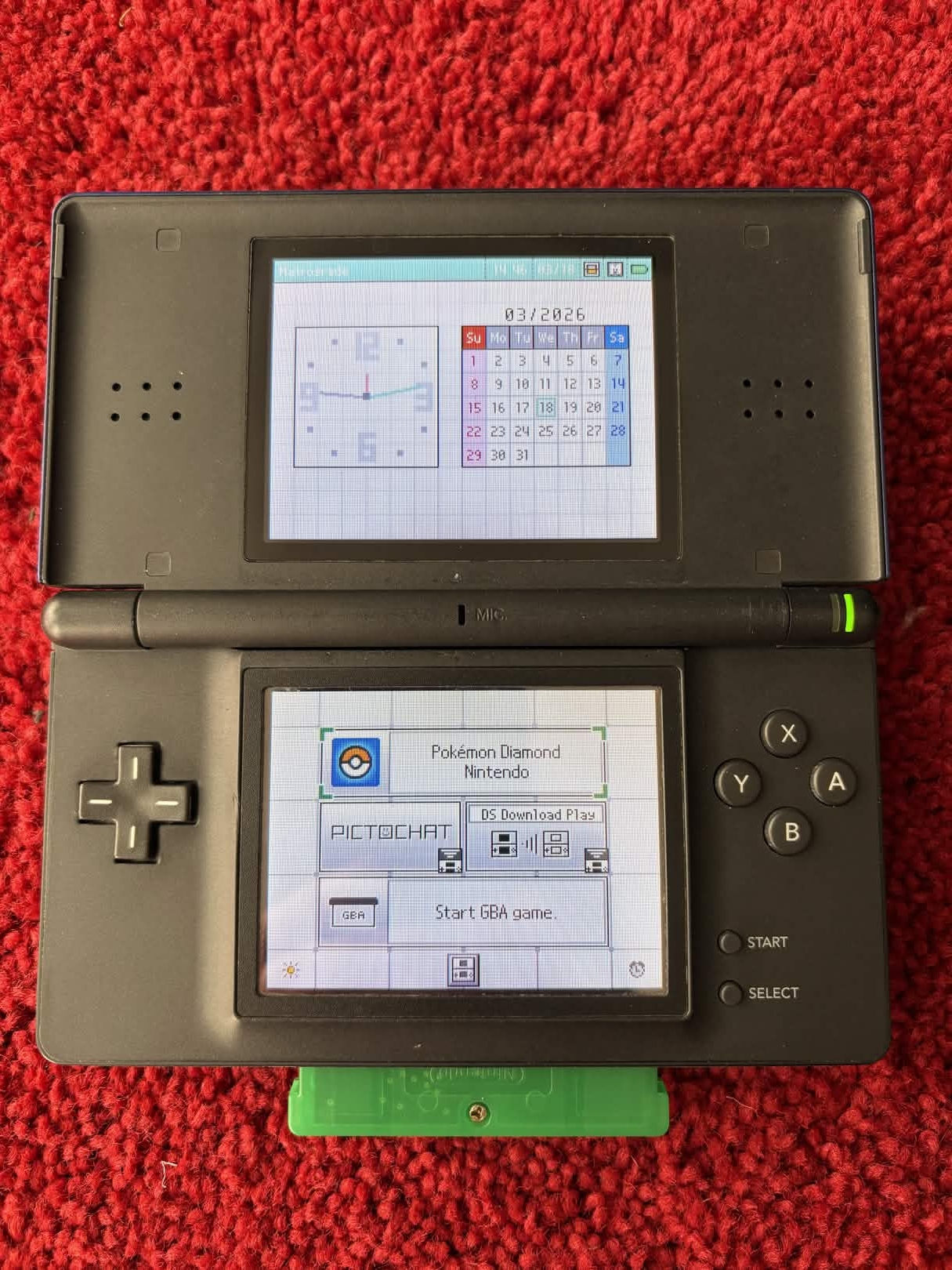
Migrating from generation three Game Boy Advance games to generation four Nintendo DS games requires the use of a Nintendo DS or a DS Lite with a Game Boy slot. This is a one-way trip: the Pokémon will be removed from the Game Boy Advance save file and there is no way to send them back using authentic hardware. The sending Game Boy Advance game needs to be saved in a Pokémon Center. If the generation four game is Diamond, Pearl, or Platinum, there are limitations in place that the National Pokédex be unlocked and that only six Pokémon can be transferred every 24 hours. If the receiving DS title is one of the two Johto remakes (HeartGold or SoulSilver), the 24 hour lock is removed, but there is still a limitation that six be sent at a time. The player is then forced to "recapture" each of the six Pokémon in a minigame (with a 100% catch rate). The transfer process is region locked, so the sending and receiving games must be from the same region.
None of the Pokémon who make it to Pokémon Home from generation three games will have origin marks. Those migrated from the three Hoenn titles will have their met location described as "the Hoenn region." Those from the two Kanto remakes are described as having been met in "the Kanto region" (but not in the "good old days" like in generation one), and those from the two GameCube titles are described as having been met in "a distant land."
Some new Generation Three mechanics
Generation three initiated a huge set of changes to the Pokémon main title system, including a complete overhaul in the data structure, which is why generation one and two games are not able to transfer to generation three. I will discuss a few of the more notable advances here, but a full accounting can be found on Bulbapedia.
- Pokémon now have abilities! Generation three saw the origin of this mechanic, which adds an extra layer to the way types and moves can be effective (or not) in battle. Abilities were present in all of the main titles and spinoffs, including the Kanto remakes and the Orre GameCube titles.
- Contest competitions exist outside of battles. Pokémon were given an independent set of contest stats that could be used in non-battle competitions to show off their style. These contests are only available in the Hoenn main series games, although contest stats can be viewed in the Orre spinoffs.
- There is another layer to collecting with the introduction of ribbons. Contest feats were also tied to earning ribbons, another mechanic that originated in generation three. Ribbons could be earned by each Pokémon individually and then carried on as they were traded to other titles or transferred to subsequent generations. This was the origin of the ribbon master challenge.
- Shadow Pokémon make their mark. The two Orre GameCube games (Colosseum and XD) introduced the concept of shadow Pokémon, where a group of villains cruelly put Pokémon into a frenzied state to control them against their will and make them unnaturally stronger. This concept has been adapted and used in other media and games including the use of laquium in the Pokémon Horizons anime and mega energy in Pokémon Legends: Z-A. The Shadow Pokémon mechanic also figures prominently in the gameplay of Pokémon GO.
My playthrough of Pokémon LeafGreen
LeafGreen was the first Pokémon game I ever played. Circa 2006, a copy ended up in the lost and found cabinet in the Blockbuster where I worked as a store manager. After waiting the obligatory number of weeks to make sure no poor kid was coming back for it, I took it home with me and played through probably a third of the game. I was surprised at the time to find that I enjoyed it, but I did not finish, and I didn't consider playing any more Pokémon games until after my fortieth birthday in 2023. At that time, I decided I would finish what I started, so I went with LeafGreen again as my "generation one" experience.
I actually played both LeafGreen and FireRed at the same time. I was not ready to spend hundreds of dollars on authentic cartridges then, so I ordered reproduction versions from eBay to get started. While waiting for them in the mail, I started playing Pokémon Colosseum on my modded Wii since I was planning on completing the entire generation three Pokédex as described above. As I explain elsewhere, I eventually ended up moving my repro save files to a flashcart that would let me appropriately interact with my Wii using authentic hardware methods.
My LeafGreen Champions


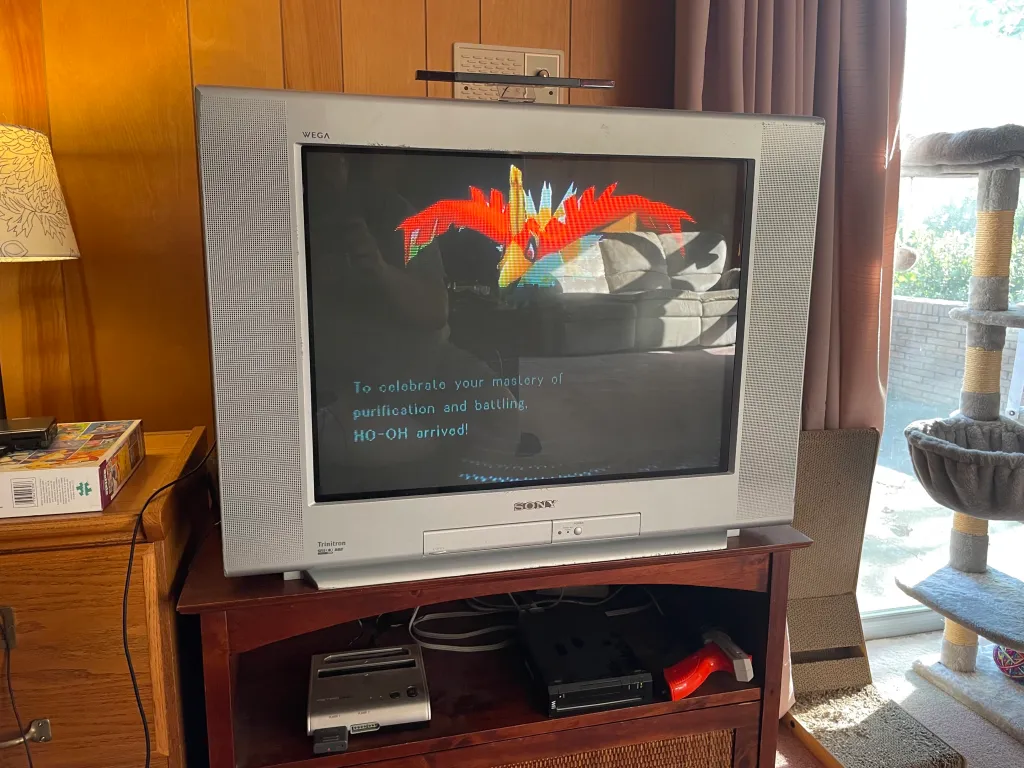
I did not intend to complete both FireRed and LeafGreen at the same time. I just wanted to play through FireRed enough to get the version exclusives. However, I loved playing this duo of games so much that I ended up finishing both, moving my Hall of Fame team between save files to complete everything. I eventually moved four of my team members (Golem, Starmie, Articuno, and Zapdos) to Colosseum to complete the 100-trainer knockout challenge and receive my generation three Ho-Oh.
My playthrough of Pokémon Colosseum
As I mentioned in the last subsection, I started playing Colosseum while I was impatiently waiting for a copy of LeafGreen to arrive in the mail. This was, therefore, really my first introduction to the games when I decided to commit to playing them in 2023. In hindsight, this was not the best way to get introduced to the franchise, since Colosseum and XD are so different (and arguably more challenging) than the main series titles. I do not think I fully understood type effectiveness even as I was facing up against the string of final opponents at the end of the story mode. It took me several tries to get through and rescue every shadow Pokémon.
My Colosseum Champions


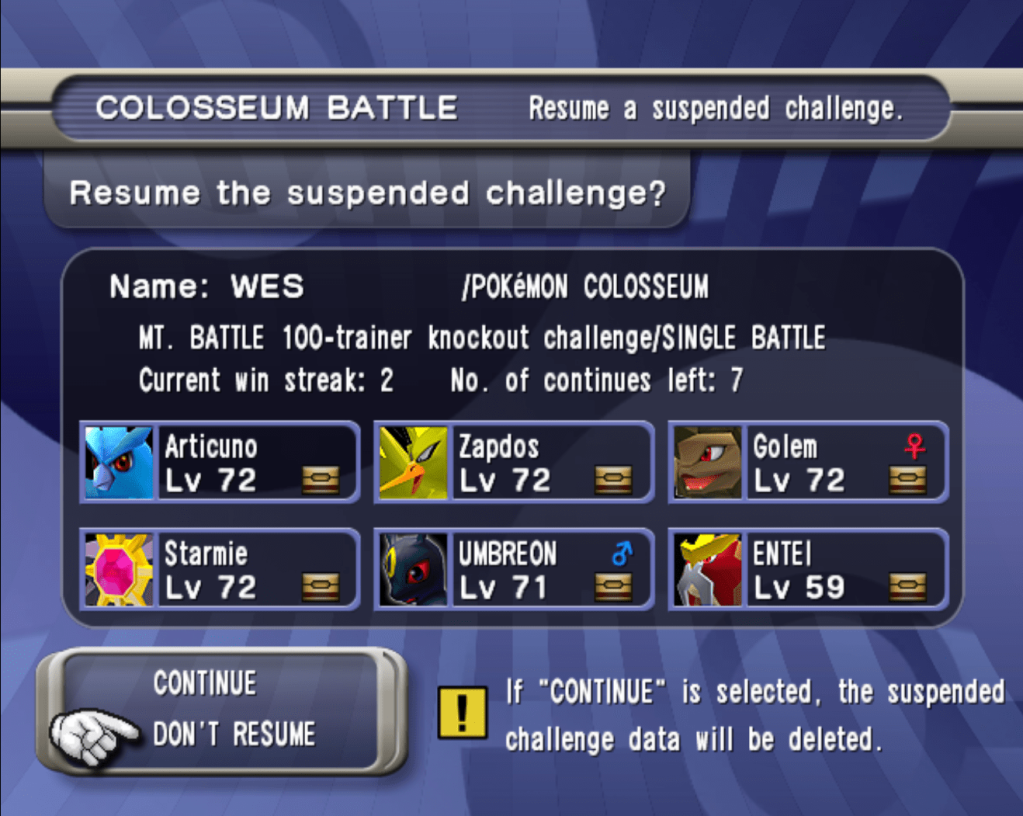
I usually play as a female trainer, and since Colosseum did not have that option, I did not use my normal trainer name (Erinys), opting instead to use the canon name of the protagonist, Wes. I also read about the catching glitch where you can throw any ball without losing it, so many of the shadow Pokémon were captured in master balls. Due to these two factors, I do not consider this a true playthrough of the game, and I plan to eventually replay it without using the exploit, with my true trainer name, and with an authentic copy of the disc on my GameCube. I will also probably not rely on the legendary dogs since I now like to complete games using regularly available species.
My playthrough of Pokémon Sapphire
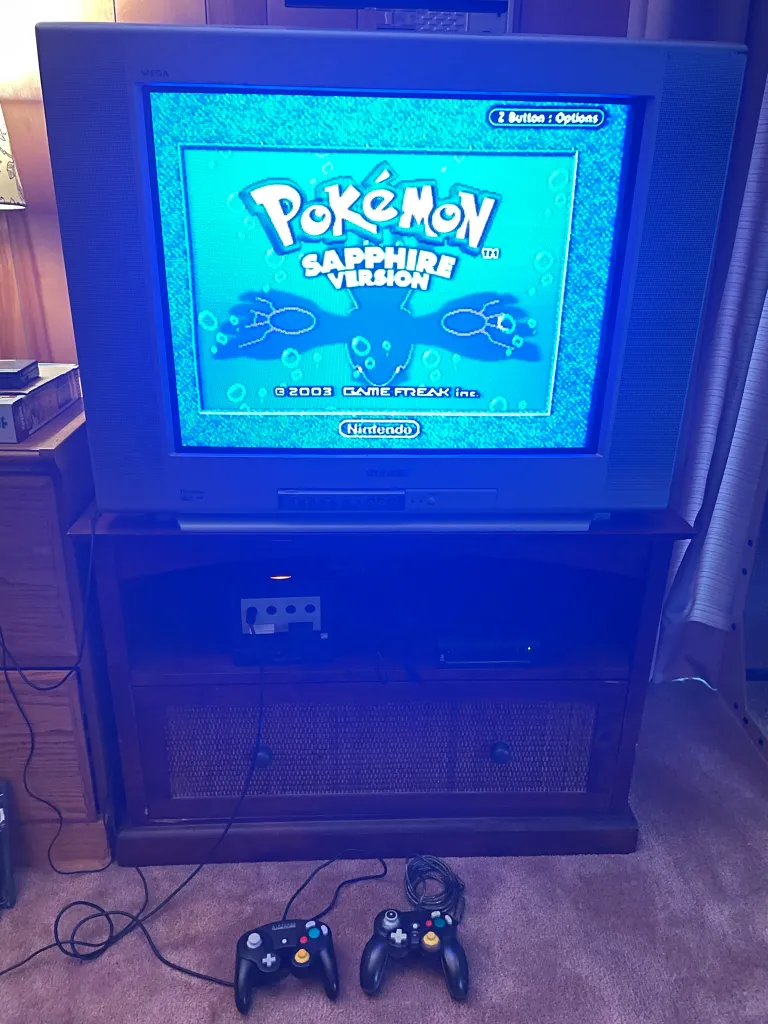
At the time that I played Sapphire, it represented the oldest-released game I had played since I decided to play remakes of generation one and two games (LeafGreen and SoulSilver). My initial plan with the Hoenn games was to play each version once, picking up the starter in each game associated with each color: Mudkip in Sapphire, Torchic in Ruby, and Treecko in Emerald. The main reason that I started with Sapphire was that I read online that earning the Winning Ribbon in Ruby and Sapphire is less of a headache than it is in Emerald.
When I started the game, I connected my device to the Colosseum bonus disc to get a copy of Wishmaker Jirachi, and I also connected to Pokémon Box Ruby & Sapphire to obtain a Swablu with False Swipe. By the time I played Sapphire, I had replaced my Nintendo GameCube console along with the Game Boy Player hardware attachment (I still, fortunately, had my start up disc from the 2000s), so I played through most of this game on my CRT.
My Sapphire Champions


My playthrough of Pokémon XD: Gale of Darkness
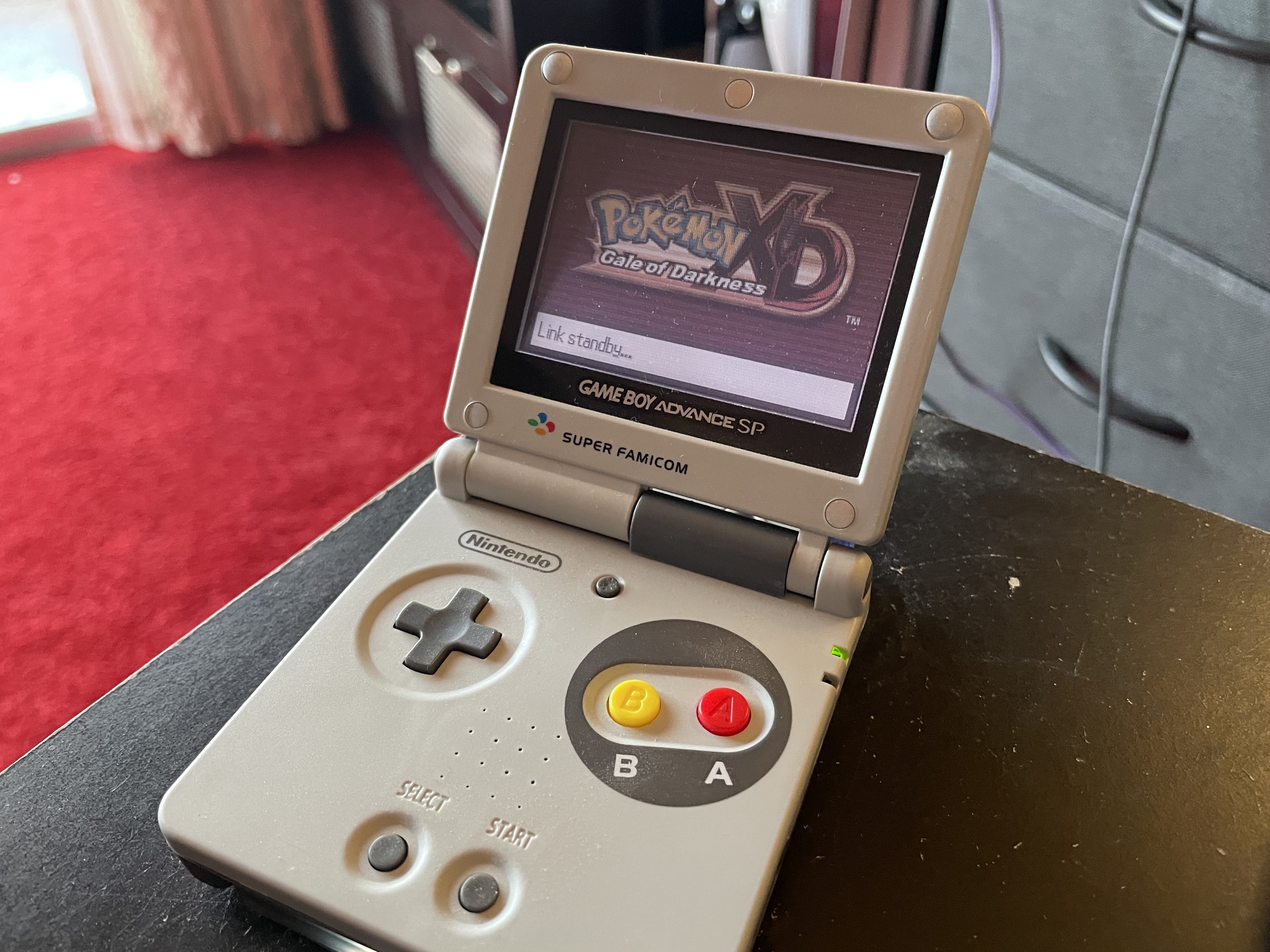
By the time I got to XD, I was much more seasoned than I had been when I started out with Colosseum, so I got a lot more enjoyment out of this game as I better understood the battle system. I actually had not intended to play XD when I did, in between Sapphire and Diamond, since at the time I was focused on finishing one main series title per generation to pave the way for a living origin dex before going back and playing other titles. However, these generation three GameCube spinoffs are just too good to pass up.
My Hexagon Challenge Team


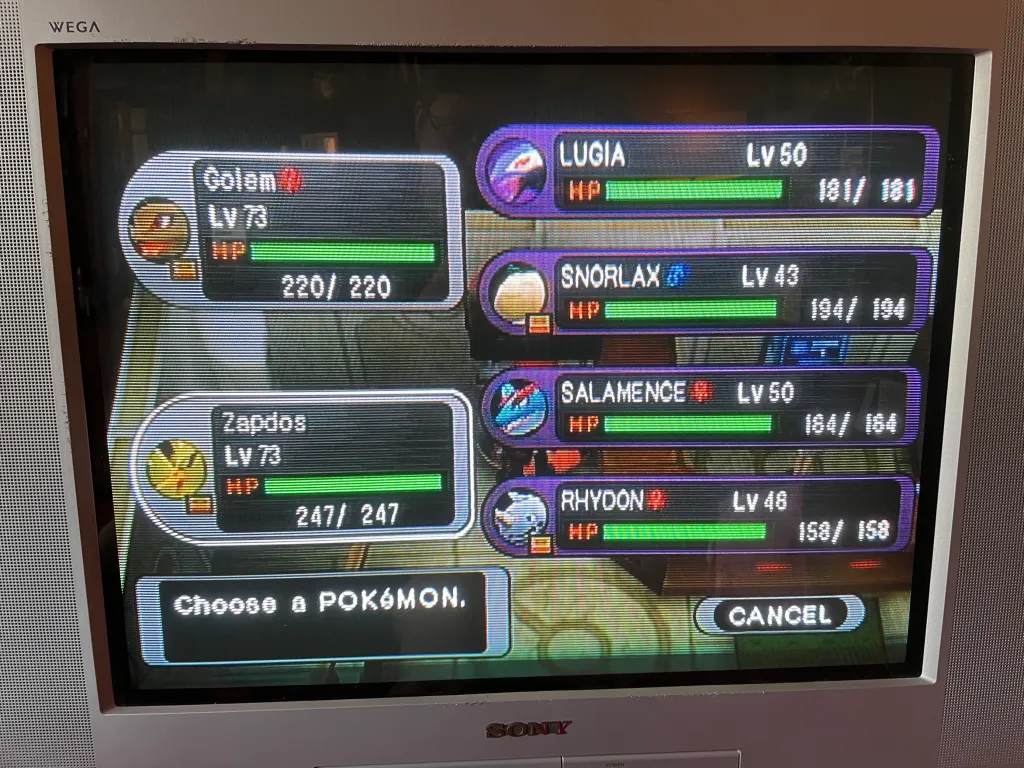
I decided to play through the game as far as I could using just the Pokémon that I rescued from the six Hexagon brothers at the beginning of the game. I also made a self-imposed challenge not to allow any Pokémon to exceed level 50 so that they would be available for the Winning Ribbon in generation three. I managed to defeat every opponent but the last two with this hexagon team, and I rescued all but one of the Pokémon (Swellow) along the way. After rescuing Chansey and Starmie, they replaced two of the hexagon team members, which helped me rescue Snorlax and Salamence, who I slotted in to help me rescue Lugia. This was pretty much necessary since you really need to have strong Pokémon still in their shadow state to absorb the shadow attacks for the final two bosses. I was only able to capture four of Greevil's six Pokémon on the first try, so I had to go back for the other two later (with a little help from two of my LeafGreen champions).
What is next?
I intend to purchase authentic copies of all the games I have already played so that I can interact with them without using third-party hardware. I will also get a copy of Pokémon Emerald for my generation three Nuzlocke, living dex, and ribbon master challenge. I am debating whether to get Japanese copies of Colosseum and Emerald so that I can use the e-Reader accessory to get the three Japanese exclusive shadow Pokémon as well as a legitimate generation three Celebi. This thought is partially fueled by the fact that the Japanese editions are much cheaper, and I think it would be fun to accomplish. If I do this, I may also obtain a Japanese copy of Pokémon Box Ruby & Sapphire, which is also significantly more affordable than the North American edition.