
Generations 1 + 2 Pokémon Journey
Table of Contents:
- Introduction
- Hardware Options
- Connectivity between games
- Generation One gameplay quirks
- Some new Generation Two mechanics
- My playthrough of Pokémon Yellow
- What is next?
Introduction
Altogether there were eight main title releases in the first two Pokémon generations. The first two games to be released were Japanese exclusives: Pocket Monsters Red and Pocket Monsters Green. An enhanced version of these games, Pocket Monsters Blue, was released shortly thereafter, and it was this enhanced version that was localized internationally as Pokémon Red and Pokémon Blue. A final, even further enhanced version of the generation one main series games, Pokémon Yellow, was also released globally. From generation two onward, all of the main title releases were global. Generation two releases were Pokémon Gold and Pokémon Silver, followed by an enhanced version, Pokémon Crystal.
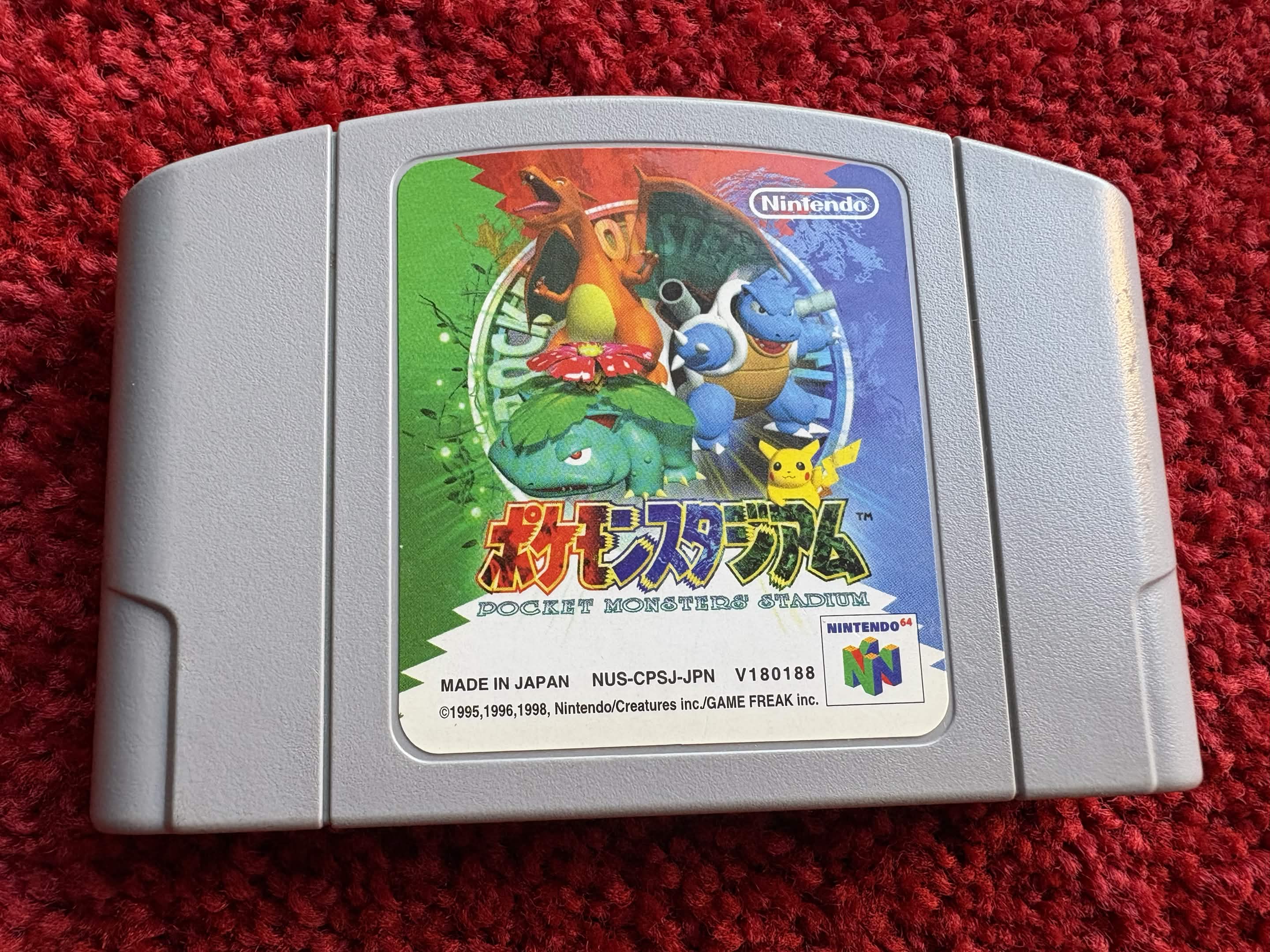
From the beginning, the Pokémon Company experimented with releasing battle-focused tournament-style support games, often available exclusively for television consoles rather than handheld devices. There were three such titles produced during the first two generations, all for the Nintendo 64 console. The first release was Pocket Monsters Stadium, which was never released globally. The sequel, Pocket Monsters Stadium 2, was released globally as Pokémon Stadium, and the third release, Pocket Monsters Gold & Silver, was released globally as Pokémon Stadium 2.
Hardware Options
The first main titles published (Red, Green, and Blue) were released for the original Game Boy handheld system, and are monochrome. When inserted into later systems with color capabilities, the monochromatic shades vary based on the game title and color. Pokémon Yellow also appears monochrome on original Game Boy systems, but appears polychromatic when played on Game Boy Color or other later backwards-compatible systems. The three generation two main title games were all designed and released for the Game Boy Color handheld system.
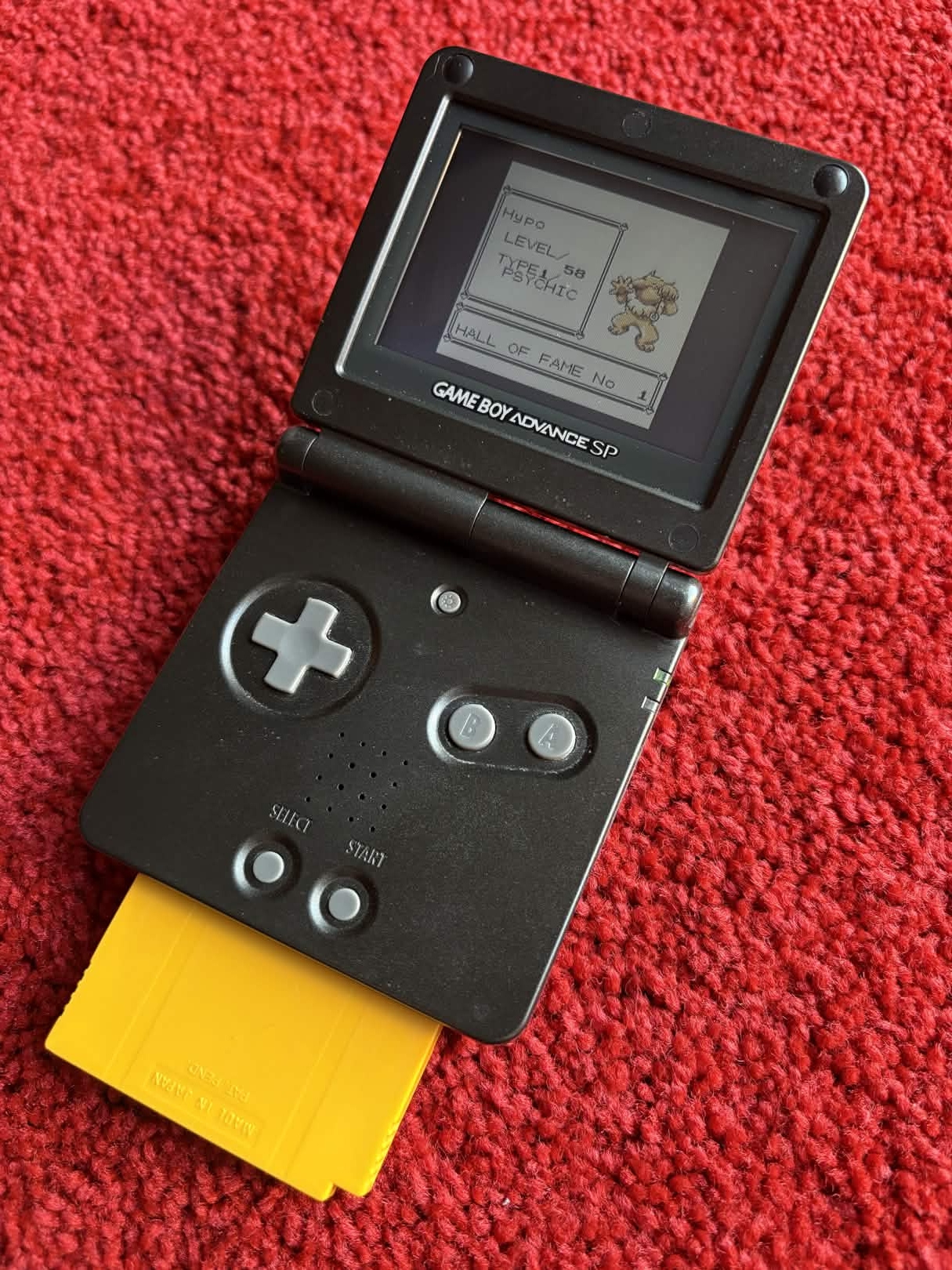
All of these releases may also be played on later Nintendo handheld devices including the Game Boy Advance and the original release of the Nintendo DS. The later DS Lite system was only backwards compatible with Game Boy Advance titles. There were three options to play generation one and two handheld titles on television consoles. The first was through the Super Game Boy adapter, which could be used with the Super Nintendo Entertainment System. The second was possible on the Nintendo 64 with a Transfer Pak adapter, which allowed the main series games to be emulated through the interfaces of the Stadium releases. The third option was through the Game Boy Player adapter for the Nintendo GameCube. The Game Boy Player features a port on the front just above the cartridge slot that accepts the various Game Boy link cables, allowing it to function like the handheld system and conduct trades as if it was a Game Boy console.
All of the generation one and two main title games were made available on the Nintendo 3DS virtual console. The Japanese exclusive titles were available on the Japanese Nintendo eShop, and the international releases were available on their respective marketplaces. Unfortunately, the Nintendo 3DS eShop was closed to purchases in 2023. Any purchases made are still available in each user's library, but nothing new can be purchased. If you really want to have these versions on your 3DS, there is a way to acquire them if you are willing to jailbreak your system. Pokémon Stadium and Pokémon Stadium 2, at the time of this writing, are both available to play on the Nintendo Switch and Nintendo Switch 2 via subscription to Nintendo Online with the expansion pass add-on.
Connectivity between games
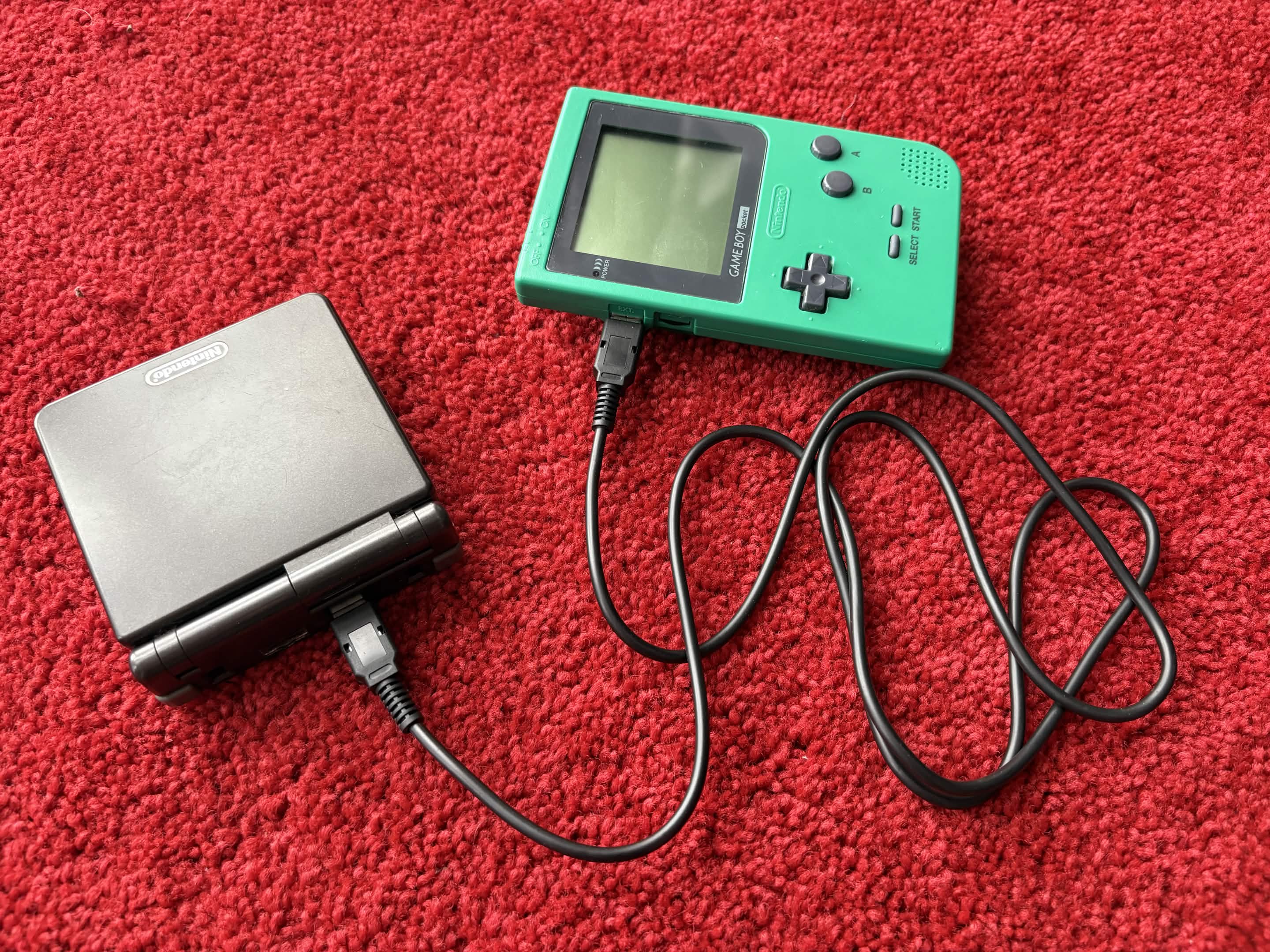
All of the generation one and two main title games can trade with each other, but one of the major differences with later generations is that Japanese language games cannot trade with non-Japanese games due to how the memory is stored on the cartridges. This rule also carries over to the Stadium games when using a Transfer Pak peripheral. The Transfer Pak locality does not matter, but only Japanese Game Boy games can interact with Japanese Stadium games. All of the western language games are able to trade with each other when considering the original cartridges, but I've read that the virtual console versions on the 3DS do not have this functionality. Only "like" language games can trade on that platform. Another limitation that crosses all versions of the games is that generation one games can only be traded the original 151 Kanto Pokémon. None of the generation two Johto species can be traded to generation one titles.
In order to trade directly between games, you must have the appropriate link cable for the version of the Game Boy you are using. The Game Boy Pocket and Game Boy Color had second generation link cables (models MGB-004, MGB-008, MGB-008A, MGB-008B, CGB-003) with smaller plugs than the cable for the original Game Boy (model DMG-04). There were adapters produced that would allow an original cable to connect to one of those later systems. The Game Boy Advance port can also utilize the second generation Pocket / Color cable, so you can trade between generation one and two games with Game Boy Advance systems if you do not want to acquire the older handheld devices. However, you cannot use the Game Boy Advance Game Link cable (model AGB-005), which is only for Advance titles (likewise, you also cannot use the older cable to trade between generation three Advance titles). Another option is to use Transfer Paks to trade between cartridges in the Stadium games.
Completing the Pokédexes
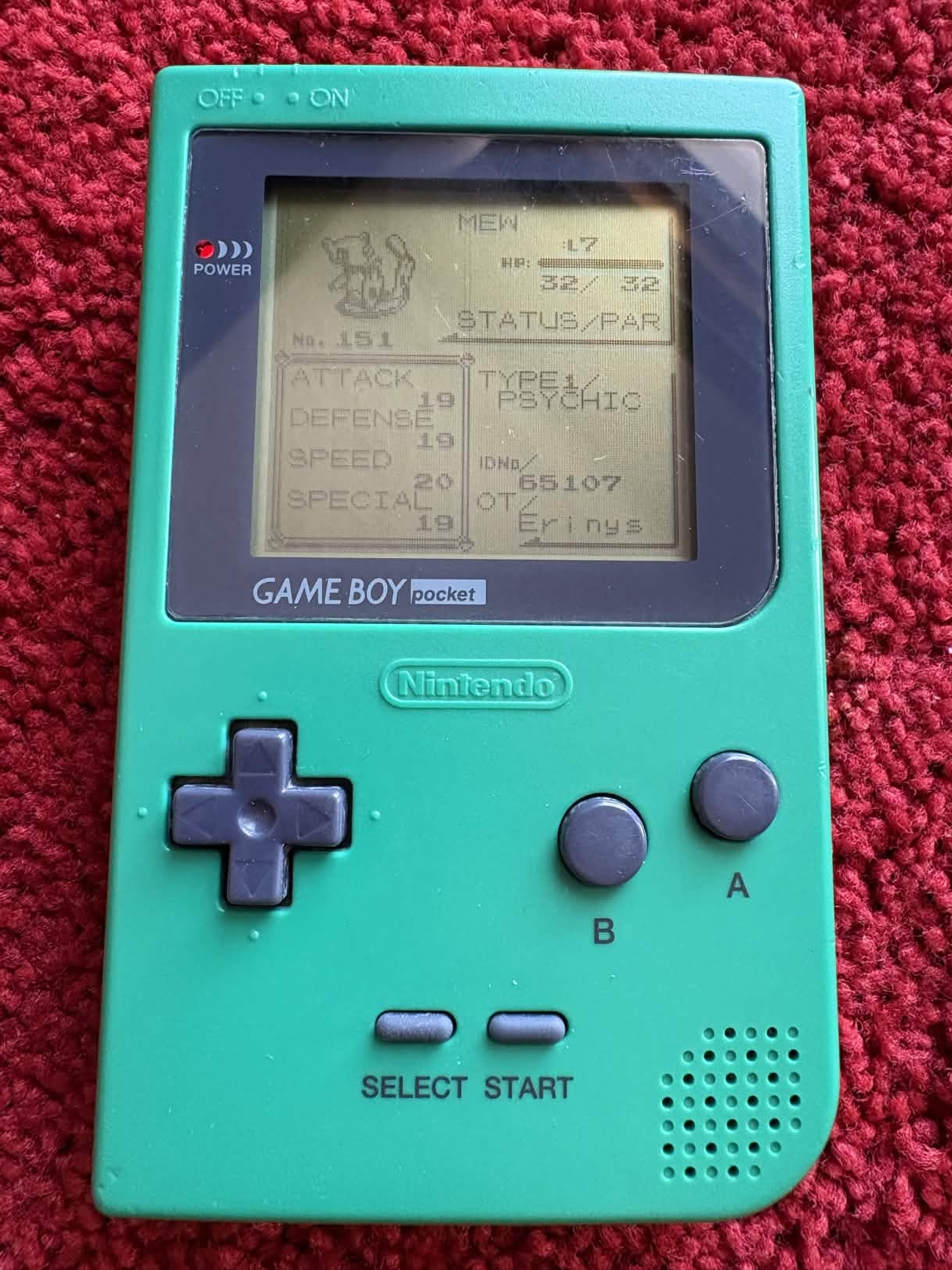
Generation one games do not include egg hatching mechanics, so you must catch, trade, or be gifted all of the Pokémon to complete your dex. This means you have to at least play through generation one titles twice, since you will need to get at least one each of the fossil Pokémon (Omanyte and Kabuto). If you want to make a living dex, you will have to play four times. Even if you have generation two games to trade with, the Kanto fossil Pokémon are not available in those games, and you also cannot breed them. One alternative option is to play Pokémon Stadium. Every time you complete the Gym Leader Castle and Elite Four challenge, you are rewarded with one of eight gift Pokémon randomly, which include the fossil types, Eevee, all three Kanto starters, and the two Saffron Gym gift Pokémon. These can all be transferred to your Game Boy cartridges through the Transfer Pak. Hypothetically, you could play through Pokémon Yellow once and fill in the gaps with gift Pokémon from Stadium and trading / breeding in generation two games. You will, of course, also need to conduct trades to complete certain evolutions.
Completion of the generation two Pokédex requires you to play through the games at least two times unless you have a good friend who will let you borrow the exclusives you are missing for breeding. If the game you choose is Pokémon Crystal, you can get both of the legendary cover Pokémon in one playthrough. If you want to complete the full 251 Pokédex, you will need to trade with generation one games for the Kanto starters, fossil Pokémon, and legendaries.
A final hurdle in both generations will be capturing the mythical Pokémon, which were infamously only obtainable through glitches. The generation one mythical is Mew, and the generation two mythical is Celebi. The 3DS virtual console version of Pokémon Crystal restored the ability to obtain a ticket that initiates the Celebi encounter without glitches.
Migrating to Future Generations
Generation one and two Pokémon are generally trapped in those two generations since there was no option to connect the games with generation three. The virtual console versions of the games, however, can deposit (one-way) into Pokémon Bank with the Poké Transporter software, which makes them available in generations six and later. If you missed out on obtaining the virtual console games, transporter, or Bank before the eShop closed, read this page section to find out how you can remedy that.
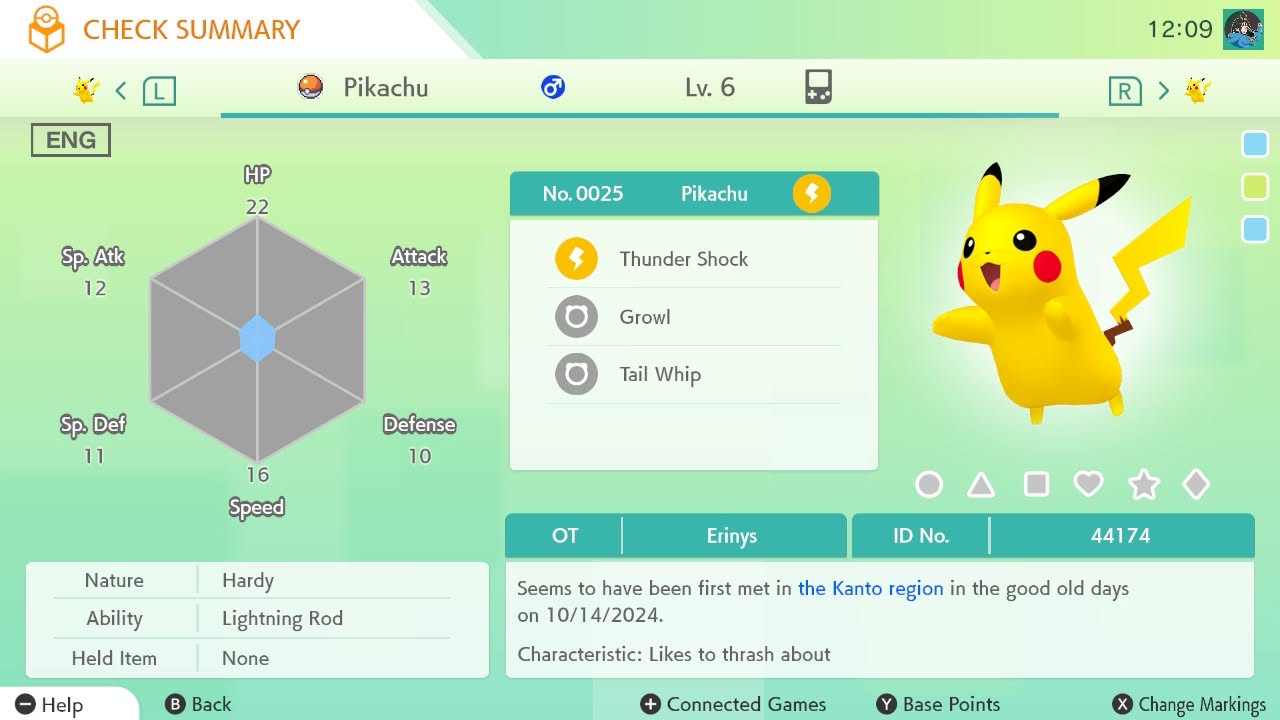
Whatever Pokémon you are able to transfer to Pokémon Home via Pokémon Bank will be displayed with an origin mark that looks like a Game Boy device. Those that originated from generation one games will have their met location described as "the Kanto region in the good old days." Those from generation two will be described as "the Johto region in the good old days." It is my understanding, although I have not tested it yet, that the met location is entirely dependent on the game from which the Pokémon was transported to Pokémon Bank rather than the game where it was captured (source).
This means, theoretically, that someone wanting to create a Living Origin Dex with their original trainer name could breed a Mr. Mime in a generation two game and then trade it to a generation one game for transport and have it show their trainer name and the correct Kanto met location. This would be the only way to achieve this, since Mr. Mime is only available via NPC (non-player character) trade in the original generation one games (thus the trainer name recorded is the NPC).
Generation One gameplay quirks
If you have played later generations of Pokémon games, you will find that generation one has some interesting differences that you should understand:
- Psychic types are broken. Dark type was not introduced until generation two, and the ghost type is bugged in generation one so that it is not super effective against psychic. This just leaves bug type moves as the only super effective attacks against psychic, but none of the bug Pokémon are able to learn damaging bug moves. The best way to approach psychic types is to bring your own psychic types that are more durable and have physical attacks.
- There is only one special stat. In generation one, special attack and special defense are all rolled into one stat, so your special attackers will also be effective at defending against special attacks.
- Critical hits are based on speed. This means that your quick attackers have a better chance to one-shot opponents before they can move.
- The sleep status is more dangerous. If you manage to put your opponent to sleep, it loses an extra turn when it wakes up, so it is really easy to keep your enemies perpetually asleep.
- Wrap is overpowered and frustrating. If a faster opponent casts Wrap on your Pokémon, it prevents it from moving for the duration, which can last several turns. This can be exploited to finish tough opponents, but it can also be dangerous and frustrating if you are the victim of a fast wrapper.
- Bag and PC inventory spaces are very limited. You only get 20 slots in your personal inventory and 50 slots in the PC inventory. Moving Pokémon and items between boxes and inventories is also very sluggish and time consuming. One way around these problems is to play your games through Pokémon Stadium. The Nintendo 64 cartridge is able to store 100 items, and it has its own independent set of Pokémon boxes. It is also much easier to organize inventory and see your Pokémon stats using the Nintendo 64 laboratory.
- There are no shinies nor genders. These features were not added until generation two, but you can still find out if your generation one Pokémon are shiny or identify their gender by moving them to generation two games (where these factors are generated based on the Pokémon's basic stats). I do not have a copy yet, so I cannot verify, but I understand that viewing your boxes in Pokémon Stadium 2 also allows you to verify gender and shiny status.
Some new Generation Two mechanics
Here I discuss a few of the more notable mechanics and changes introduced in Generation Two. If you want a full list of every major and minor change, I encourage you to visit Bulbapedia.
- New types were added: dark and steel. These were added to help balance the type system. They specifically addressed the overpowered nature of psychic types in generation one. The new dark type is super effective against psychic, and psychic attacks have no effect on it. Psychic types were also not very effective against steel.
- A male-female gender system was added along with breeding mechanics. In generation two, gender was determined by the attack of the Pokémon, which meant that females could never have a maximized attack stat unless they were members of an all-female species. This also affected the ability of certain female Pokémon to be shiny, since shiny status was also based partly on attack. Generation two also introduced the breeding and egg-hatching mechanic, which was initiated by leaving two compatible Pokémon at a day care center.
- Pokémon can be shiny. Shiny Pokémon with different colorations first appeared in generation two games. Shiny status was determined by base stat values, so trainers could use the breeding system to increase their chances of encountering them.
- Baby Pokémon were introduced. Generation two introduced eight baby Pokémon, seven of which evolved into forms already existing in generation one. These could not serve as breeding partners, and many of them only evolved after reaching a high level of friendship with the trainer.
- Pikachu was no longer our only friend. Beginning in generation two, trainers could develop friendship with any of their Pokémon (the mechanic was introduced solely with the partner Pikachu in Pokémon Yellow). Friendship gains could improve depending on the Pokéball used for capturing and held items like the Soothe Bell.
- Pokémon may now hold items! In addition to the introduction of hold items, Pokémon traded from generation one games using the time capsule could appear holding a fresh item.
- Pokémon can get sick, but it's a good thing. Generation two introduced Pokérus, a virus that Pokémon can catch and spread for a limited period of time that multiplies the stat increases Pokémon receive from battles.
My playthrough of Pokémon Yellow
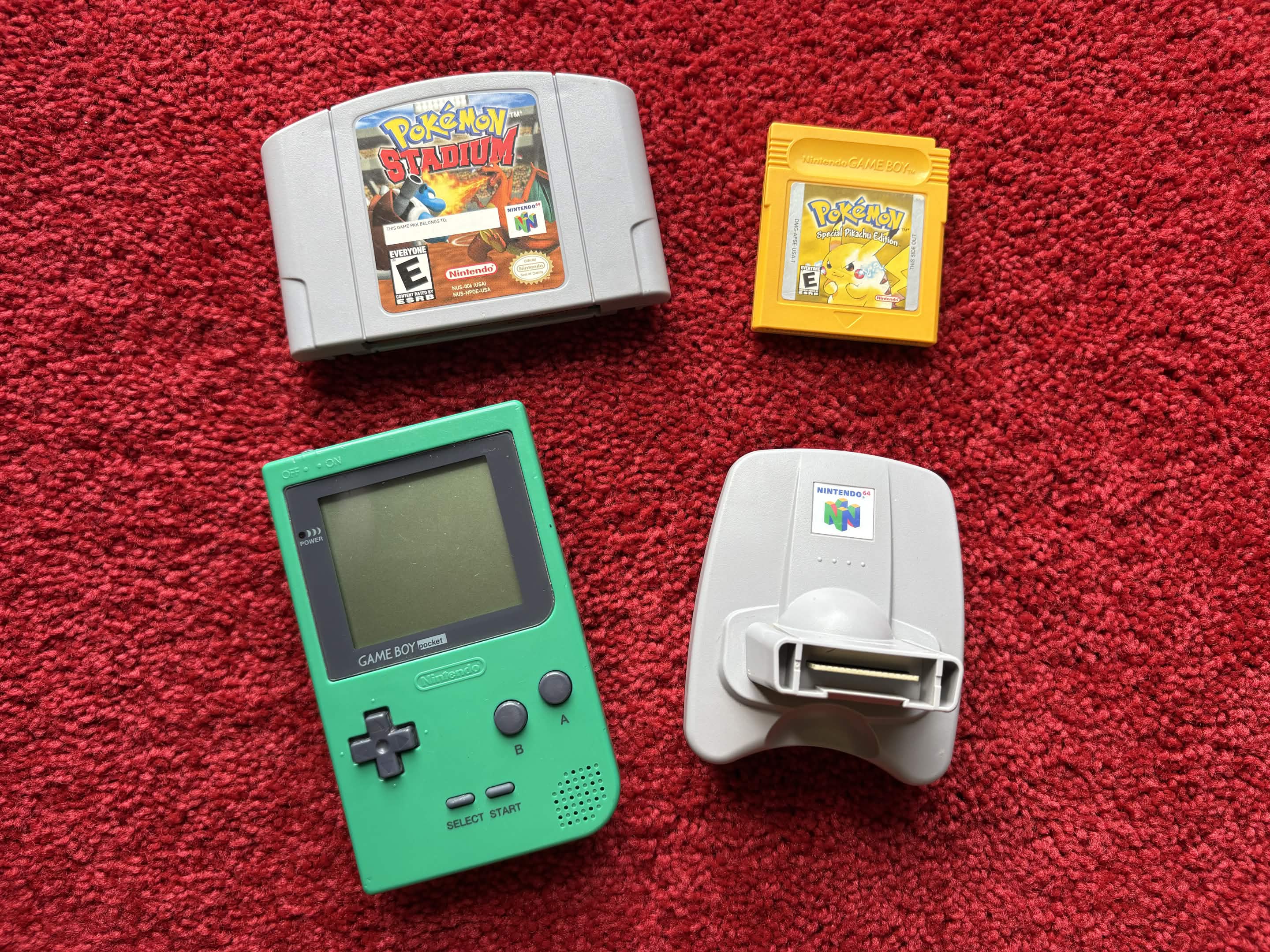
When I first decided I wanted to play Pokémon games, my foremost interest was in creating living dexes, so I was not planning to play any of the original generation one or generation two games. This was because they cannot be sent to generation three, and I was particularly keen to make a living dex in Pokémon Emerald using all of the available generation three games. I therefore started with the generation one remakes on Game Boy Advance and then played Pokémon SoulSilver as my representative generation two experience. Later on, once I got up to later generations and had read more and more about migrating, I learned what I've written above regarding the virtual console games and their ability to be transported into generation six and later. By then I was also much more invested in buying authentic copies of the games rather than playing around with flashcarts, so I decided that once I had caught up the main series (Scarlet & Violet at that time) I would go back and experience the earliest games properly.
Nuzlocke challenge
While acclimating to Pokémon gaming, I had of course learned about Nuzlocke challenges, so I decided that my second playthrough of each generation that I needed to perform to complete a Living Origin Dex should include at least one Nuzlocke run each. I selected Pokémon Yellow since it makes available all three Kanto starters and therefore might reduce the number of generation one playthroughs I might need to complete. Now that I've finished it and enjoyed it so much, I want to play Red and Blue at least once each as well and earn all of the achievements for all three games on Retroachievements.
I used the following ruleset for my first ever Nuzlocke challenge:
- Any Pokémon that faints must be released or boxed permanently. It is considered “dead” for the rest of the challenge.
- Only the first wild Pokémon encountered in a route or area can be caught. If the player fails to catch it (ie. it flees or faints), their opportunity to catch a Pokémon in that area is lost. If the first Pokémon in an area is one the player already owns, they may continue battling until they encounter one they do not own, and then attempt to catch it.
- Level caps are enforced! The player's Pokémon may not exceed the highest level of the next gym leader's highest Pokémon. This also applies to the Elite Four and Champion.
- The player must nickname all Pokémon they catch or obtain.
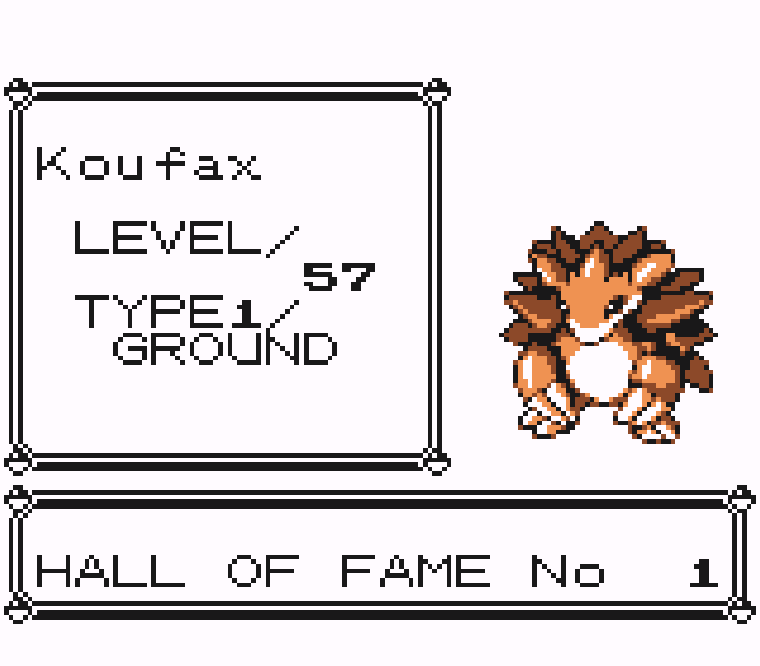
Those of you who are already familiar with the Nuzlocke concept know that rules one and four are part of the basis for every Nuzlocke and that rule two is also part of every basic Nuzlocke but with what is known as a "duplicate clause" added. Rule three is an optional rule to make the Nuzlocke more challenging. I am proud to say that not only was my first Nuzlocke challenge a success but I was also able to enter the Hall of Fame without ever having one of my Pokémon faint. I kept a log on my blog of each Pokémon that I captured in each location as well as details about which of my team members were involved in defeating each of the main opponents.
My Yellow Nuzlocke Champions

Koufax the Sandslash
Met on Route 4, from Lv. 8


Ivy the Venusaur
Met in Cerulean City, from Lv. 10


Hypo the Hypno
Met on Route 11, from Lv. 15


Spike the Jolteon
Met in Celdaon City, from Lv. 25

Yu the Starmie
Met in Pallet Town, from Lv. 10

Blue the Lapras
Met in Saffron City, from Lv. 15
Honorable Mention

Chu the Pikachu
Starter, from Lv. 5

Marge the Butterfree
Met in Viridian Forest, from Lv. 6


Zero the Fearow
Met on Route 3, from Lv. 8
Gushing over Pokémon Stadium
Replacing my Nintendo 64 after more than two decades and acquiring a copy of Stadium was one of the smarter decisions I felt I made in recent months. It made my generation one experience so much smoother given that it provides more space for items as well as a sleeker menu system for moving around items and Pokémon. The generation one games have a very clunky computer menu that forces you to back out of your box and manually swap to a different box before viewing its contents. You also cannot simply swap Pokémon between boxes or between your party and the selected box. You have to deposit one of your party Pokémon, which goes to the bottom of the box, before you can withdraw one. You also cannot see the stats of your Pokémon, and if you nicknamed them, you better remember which nickname belongs to which Pokémon because that is all it lets you see in the box list. The Stadium interface is much more friendly. It shows all of your Pokémon in three dimensions as well as stats and moves. It also lets you swap between boxes much more easily.
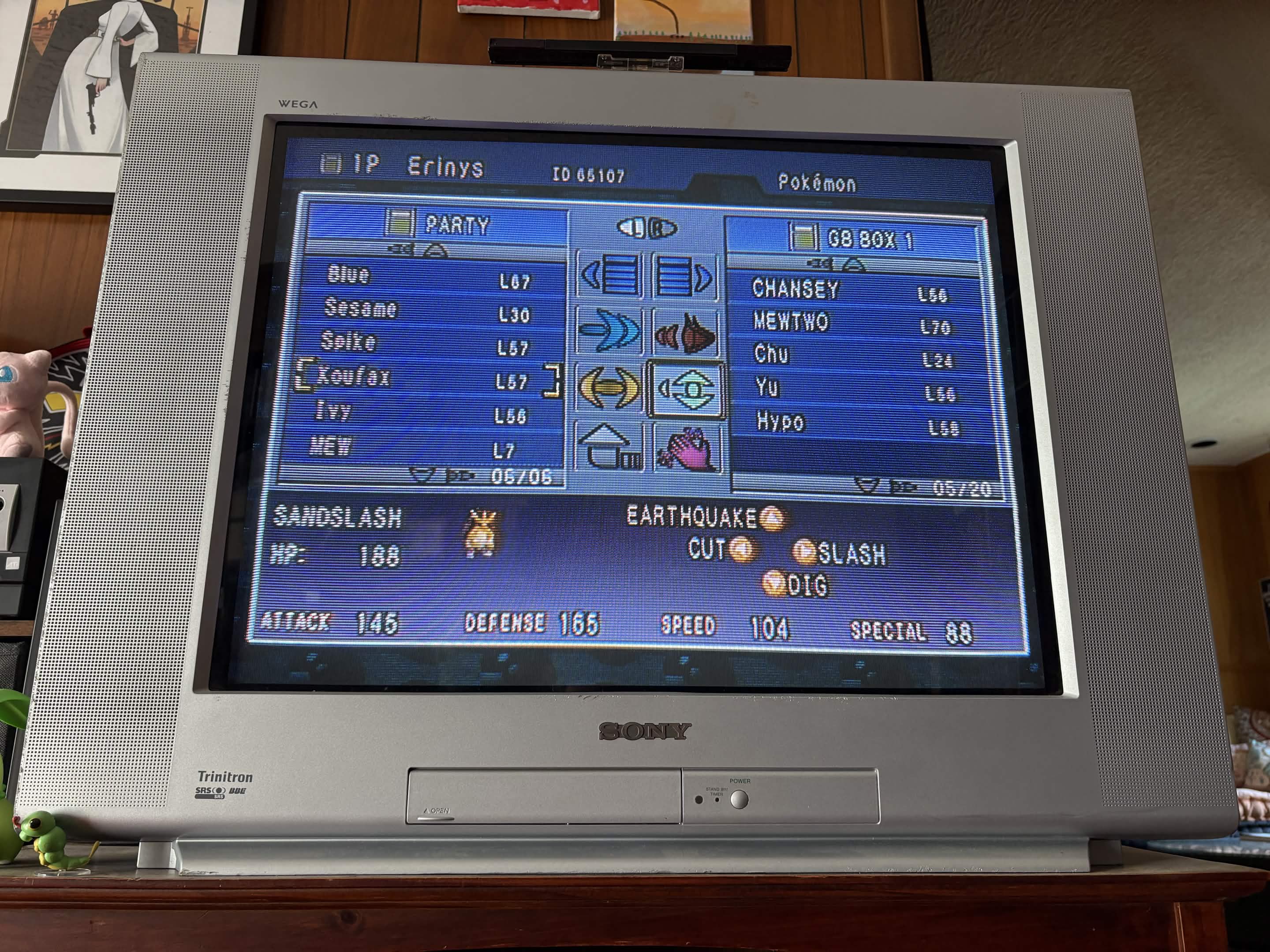
Another benefit is that the 64 cartridge has its own item space and set of Pokémon boxes. I basically put all of my items into the 64 cartridge inventory space except for key items that you cannot place in Stadium (HMs, bicycle, etc). While the first Stadium title does not share its item inventory between cartridges, I've read that Pokémon Stadium 2 does. This will make playing subsequent titles like Red or Blue much nicer because I will easily have access to all of the TMs and items that I did not use. It will also make building a living dex easier, since I can store all of the Pokémon in Stadium and then move into games to complete each Pokédex. One final bonus to the Stadium inventory interface is that you can highlight the TMs and see which moves they contain, which you cannot see in the generation one games unless you actually try to use them.
What is next?
As I have already written, I want to play the other two North American releases of generation one games (Red and Blue), and I may play through Yellow again for my fourth run to finish a living dex of the fossil Pokémon. However, I am also interested in playing the original Pocket Monsters Green, especially since I have already acquired a copy of the original Pocket Monsters Stadium, with which it is compatible. The only down side is that I would not be able to trade with my English language games without using a tool like the GB/C Trader on Blue Moon Falls.
Concerning generation two, I plan to acquire a copy of Pokémon Crystal and Pokémon Stadium 2. I have a friend who has Pokémon Silver with a dead battery, so in exchange for replacing it for him, I hope he will trade me version exclusives that I can use to complete my living dex by breeding. I will update this page whenever I make progress on any of these fronts.