
Generations 6 + 7 Pokémon Journey
Table of Contents:
- Introduction
- Hardware Options
- Connectivity between games
- Some new Generation Six mechanics
- Some new Generation Seven mechanics
- My playthrough of Let's Go Eevee
- My playthrough of Pokémon X
- My playthrough of Pokémon Moon
- What is next?
Introduction
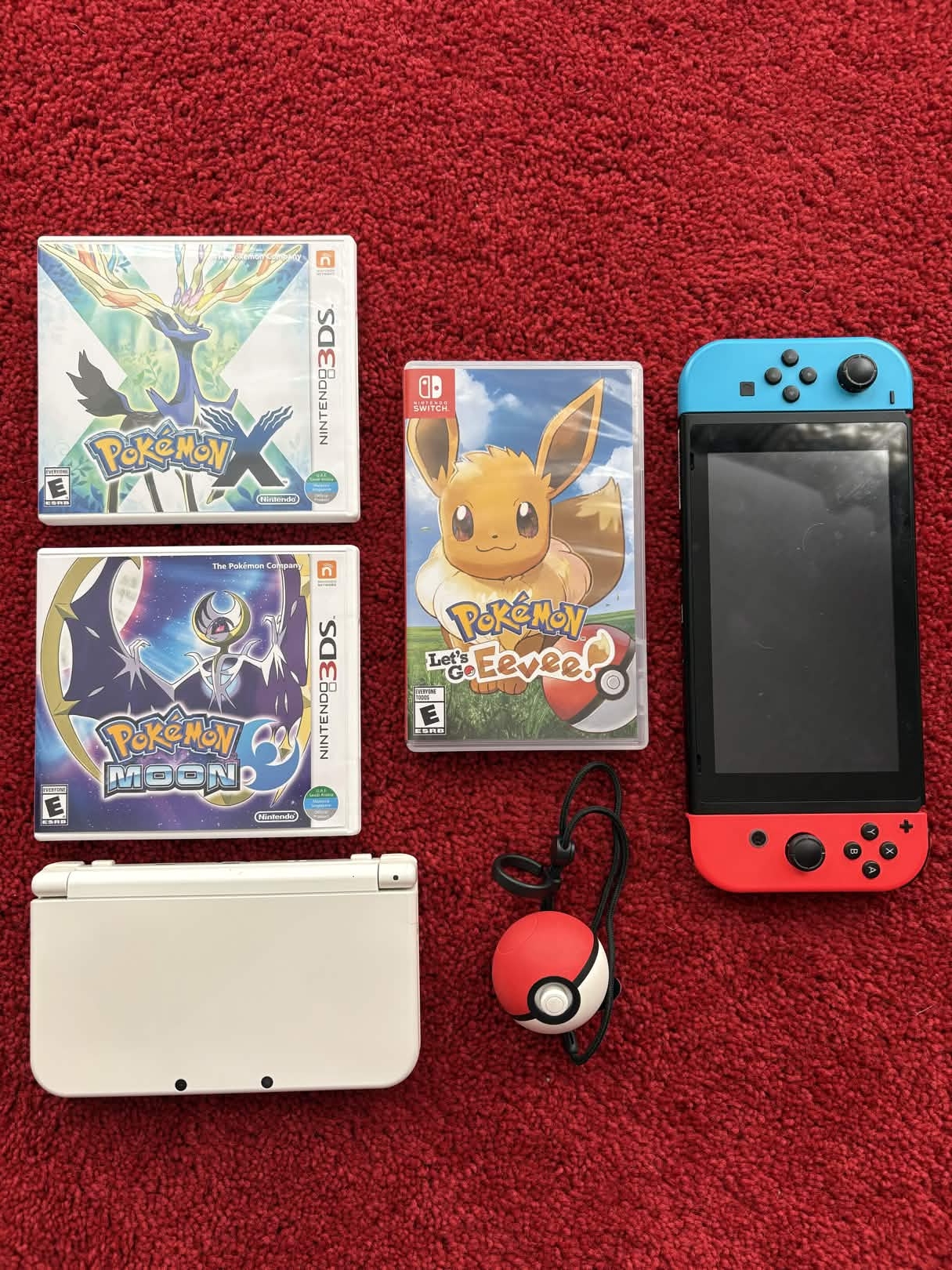
Generations six and seven were released primarily for the Nintendo 3DS console, although one final pair of titles near the end were released for the Nintendo Switch. Generation six consisted of four games and two supporting utility software titles. The pair of main title releases were Pokémon X and Pokémon Y. These were followed by a pair of generation three remakes: Pokémon Omega Ruby and Pokémon Alpha Sapphire. The utility software titles were Pokémon Bank and Poké Transporter.
Generation seven saw the release of three pairs of games including four titles for the 3DS and two titles for the Switch. The initial main title releases were Pokémon Sun and Pokémon Moon. Enhanced versions of each title were released a year later: Pokémon Ultra Sun and Pokémon Ultra Moon. The final generation seven titles were Let's Go Eevee and Let's Go Pikachu, which were remakes of Pokémon Yellow released on the Nintendo Switch. Some of the game play elements were designed to capitalize on the popularity of the mobile title, Pokémon GO.
Hardware Options
This section almost becomes irrelevant by generations six and seven, since it's so simple. All of the games, except for the Let's Go titles, will work on any of the Nintendo 3DS family of systems. These include the 3DS, the 3DS XL, the 2DS, the "New" 3DS, and the "New" 2DS XL. Both of the Let's Go titles are compatible with all of the Nintendo Switch family of systems that have been released so far. These include the Switch, Switch Lite, Switch OLED model, and Switch 2. However, the 3DS family of systems were region locked, so you must obtain a region-compatible copy of each title that you want to play on a particular system. The Nintendo Switch family of systems are not region locked in the same way. Other regional cartridges can cross between regional systems.
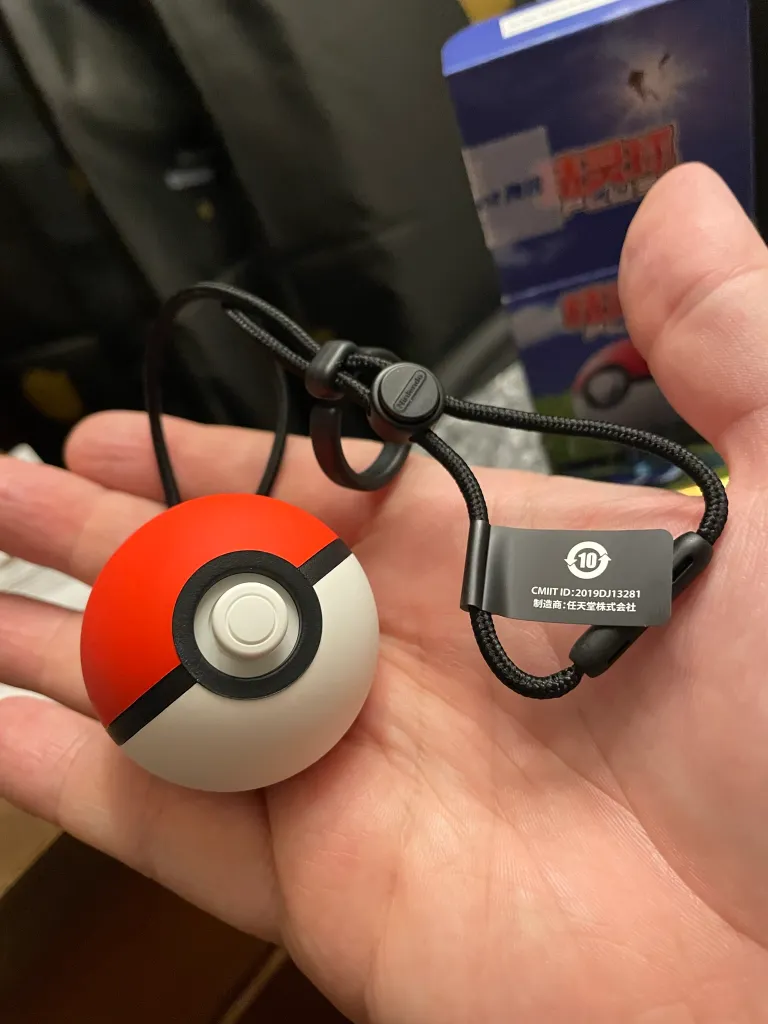
The Let's Go titles could be purchased with a Poké Ball Plus accessory, or one of these could be purchased independently. These devices allow the trainer to take their Let's Go Pokémon out on walks, where they can connect with Pokémon GO and work as an autocatcher and auto spinner. The accessory rumbles, and each individual Pokémon has its own audio calls that are emitted from the device when it is manipulated in specific ways. As with the Pokéwalker accessory in generation four, the Pokémon return from their walk with experience points and items. Finally, the accessory may also be used as a controller for the Let's Go games in place of a Joycon. The Poké Ball Plus accessory is not region locked. When I was in the market for one a couple of years ago, they were very expensive (if they still contained the complimentary Mew), but a flood of Chinese regional editions came out, and I was able to purchase one and use it on my North American Switch.
Connectivity between games
All of the generation six titles are able to interact and trade with each other wirelessly, and the generation seven 3DS titles can all do the same within their own generation. All of these 3DS titles may also be accessed by Pokémon Bank, which is an independent Pokémon storage software that was available for free through the Nintnedo 3DS eShop. Pokémon can be moved freely between the 3DS titles and Bank, but please note that once Pokémon have been placed in a generation seven game, they cannot be moved back into a generation six game. The same goes for Pokémon that were brought to Bank using the Poké Transporter from generation five or the virtual console titles. They can initially be brought into generation six games, but if they are brought into generation seven games, they cannot go back to generation six. If you did not obtain Bank prior to the eShop closing, read this page section to find out how to access it. The Let's Go Switch titles can trade between each other, but they cannot trade with any of the 3DS titles.
Completing the Pokédexes
Generation six started a new tradition where the main title games would have regional Pokédexes to fill within a single game. X and Y featured three Pokédexes: Central, Coastal, and Mountain. Generation seven 3DS titles featured separate Pokédexes for each island that was visited during the adventure. The generation three remakes featured a new Hoenn Pokédex that included some of the generation four evolutions. By playing all four generation six games, players can complete the entire National Pokédex that existed up to that point, with the exception of some of the mythical Pokémon who were only available through event distributions. The generation seven 3DS titles, conversely, did not include a National Pokédex, and many of the earlier generation Pokémon are unavailable.
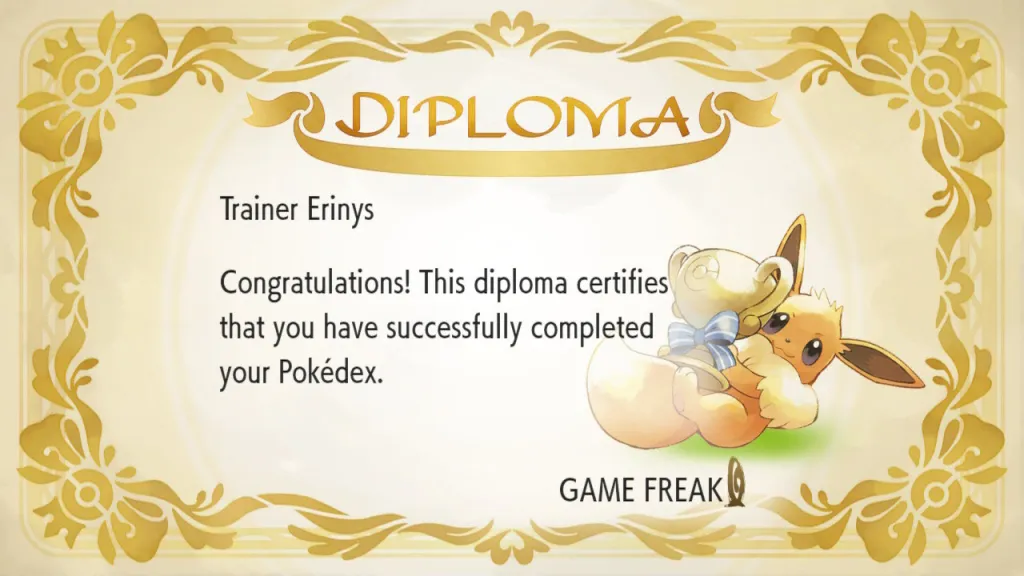
Let's Go Eevee and Let's Go Pikachu only include the Kanto Pokédex, which can be completed either by trading regional exclusives between titles or by transferring Pokémon from Pokémon GO using the GO Park feature. There were two additional mythical Pokémon added to the end of generation seven who could only be acquired by connecting Pokémon GO to the Let's Go titles. These were Meltan and Melmetal. To this day, Melmetal can only be evolved from Meltan in Pokémon GO, so trainers must perform the evolution there before sending them to the Nintendo Switch.
Migrating to Future Generations
Pokémon can make their final migration to the modern games and systems by transfering from Pokémon Bank to Pokémon Home. This is a one-way trip. Pokémon cannot go back to the 3DS games once they are in Home. The Nintendo Switch receiving the Pokémon into Home and the Nintendo 3DS sending from Bank do not need to be logged into the same Nintendo account. Each transfer generates a unique 16-digit moving key. Up to 30 Pokémon can be part of each transfer.
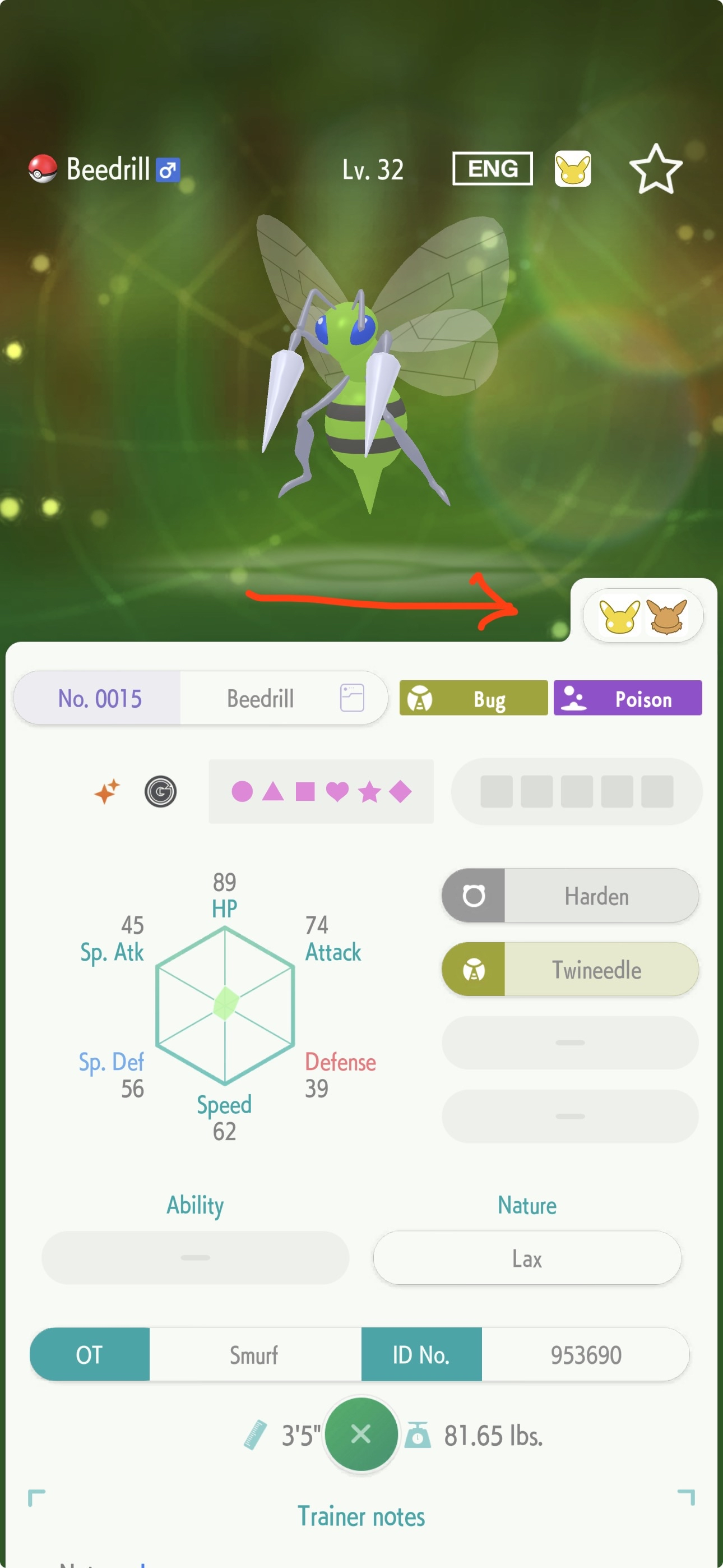
The Let's Go titles can interact directly with Home, but with some notable caveats. Pokémon can be transferred back and forth between the Let's Go games and Home as long as they do not "visit" any of the other Switch Pokémon titles. This also applies to Pokémon that were sent to Let's Go through the GO Park. They may have the same GO origin mark like Pokémon that were directly transported from GO to Home, but the latter cannot be moved into the Let's Go Switch titles. One can tell whether a Pokémon is still able to move freely into the Let's Go titles by looking at how the Pokémon is "stamped." In addition to an origin mark, the Home profile will show the last series of games from which the Pokémon was moved (see the red arrow on the nearby screen capture). There are also ways to filter lists in Home that only include Pokémon who are able to visit specific titles.
Pokémon migrated to Pokémon Home from generations six and seven will have a variety of origin marks and met locations. Pokémon from X an Y were met in "the Kalos region" and Pokémon from Alpha Sapphire and Omega Ruby were met in "the Hoenn region." All of these will have a pentagon origin mark (Pokémon from the original generation three Hoenn titles can be differentiated since they have no origin mark). Pokémon from all four generation seven 3DS titles were met in "the Alola region." All of these will have a clover origin mark. Pokémon from the Let's Go titles were met in "the Kanto region." All of these will have an origin mark of a silhoetted head with animalistic ears (Pokémon from the generation three Kanto titles can be differentiated since they have no origin mark).
Some new Generation Six mechanics
For a more complete list of advances and changes, read Bulbapedia.
- Now there are fairies. Generation six, to date, is the last generation where a new type was introduced. This was the fairy type. This came with an accompanying nerf to the steel type, which is super effective against fairy. While previously ghost and dark type moves were not very effective against the steel type, from generation six onward they had normal effectiveness.
- The Nintendo 3DS is, well, 3-D. Generation six did away with the four-way grid-based movement system, where steps could be counted precisely as the protagonist moved left, right, up, and down. While generation six allowed for eight-way directional movement, generation seven would take this even further, making movement more fluid in any direction. The generation six titles also made use of the console's stereoscopic 3-D function during battles and cutscenes.
- We don't just evolve, we mega evolve. Generation six introduced the mega evolution system, which would later reappear in the Let's Go titles and in Pokémon Legends Z-A. Pokémon may hold a species-specific "mega stone" that allows them to temporarily evolve into a stronger, more visually elaborate form. The effects of mega evolution end after each battle, and only one Pokémon can be mega evolved over the course of a single battle.
- We can finally customize our outfits and looks. Generation six introduced the ability to customize the protagonist, beyond just providing single male and female options. Several skin colors were made available along with hair colors and styles. There were also clothing and accessory shops to make the customization complete.
Some new Generation Seven mechanics
As usual, visit Bulbapedia for a full accounting.
- We get more forms. While generation six introduced the concept of mega evolution forms, generation seven debuted the first "regional" forms of older Pokémon. In the 3DS titles, there are 18 new "Alolan" forms of Kantonian Pokémon. These forms are also obtainable in the Let's Go titles through in-game trade or by using GO Park. Generation one Pokémon that are migrated in from the virtual console titles or generation five can be evolved into Alolan forms. For example, a Pikachu can be captured in Pokémon Blue on the virtual console and then brought from Bank to Pokémon Moon, where a Thunder Stone can be used to evolve it into Alolan Raichu. This does not work in the Let's Go titles. Pokémon stay in their regional forms when they are evolved there (Alolan Rattata will become Alolan Raticate, Kantonian Rattata will become Kantonian Raticate, Alolan Raichu cannot be evolved since there is no Alolan Pikachu).
- We get high-powered Z-moves. While generation six introduced mega evolution as a way to temporarily power up a Pokémon using a held item, the generation seven 3DS titles added Z-moves that could be powered up by holding the appropriately typed Z-Crystal. Mega evolution and stones were still available in the postgame, and mega stones and evolution were also available in the Let's Go titles.
- The traditional gym progression system is paused. One of the basic formulas for Pokémon video games is that trainers progress and get stronger by facing gym leaders and acquiring gym badges. This was set aside for the generation seven 3DS titles, where one of the plot points was that the Alola region did not have a gym system or an Elite Four (at least at first). This was replaced by an "island challenge," where trainers would participate in various trials organized by captains. Rather than facing a strong gym leader in battle, the trainer would face a Totem Pokémon. This was, in my opinion, a refreshing approach and placed a greater focus on the natural world and the Pokémon.
- Ahh, no more hidden moves. Since it's inception, another hallmark of the Pokémon video game experience was the required use of hidden machines (HMs) to learn hidden moves like Cut, Surf, and Strength, which were necessary to navigate puzzles in the field. These moves had to be taught to Pokémon, and only certain Pokémon could use certain hidden moves. This placed limitations on battle strategy, since particular Pokémon would have to be brought along based on the terrain to be navigated, and sometimes trainers would be forced to keep a versatile Pokémon in their party for the sole purpose of deploying HMs. Generation seven did away with this mechanic, which allows trainers to fully utilize their team for battling. The 3DS titles include a mechanic called Poké Rides, which allow the trainer to saddle up a few different Pokémon to deal with various types of terrain. The Let's Go titles use a system of "secret techniques" that the partner Eevee or Pikachu can use outside of battle that do not take up move slots.
- Experience is shared automatically. Generations one through six utilized held items and key items as ways to share experience with Pokémon teammates in the accompanying party without sending them into battle. From generation seven onwards, this mechanic is automatically present from the beginning. This makes it very quick and easy to give experience to lower-leveled Pokémon and get them caught up to the rest of the team. Another fantastic advance is that you get experience points for capturing Pokémon, not just making them faint. In hindsight, this seems like it should have been obvious from the start, since capturing a Pokémon is usually more work than simply knocking it out.
- 3DS but no 3-D? This is another place where I want to gripe a little. The generation seven 3DS titles do not make use of the console's stereoscopic 3-D function like their generation six counterparts. I understand why this functionality was excluded. I am sure it makes the gameplay much smoother, but part of me was still a little disappointed because I think the stereoscopic 3-D is one of the charms of the 3DS system that mirrored the fleeting interest in 3-D technology that permeated media formats in the 2010s. While it has generally been abandoned across media platforms, I predict that it will become interesting to future generations as a retro technology.
My playthrough of Let's Go Eevee
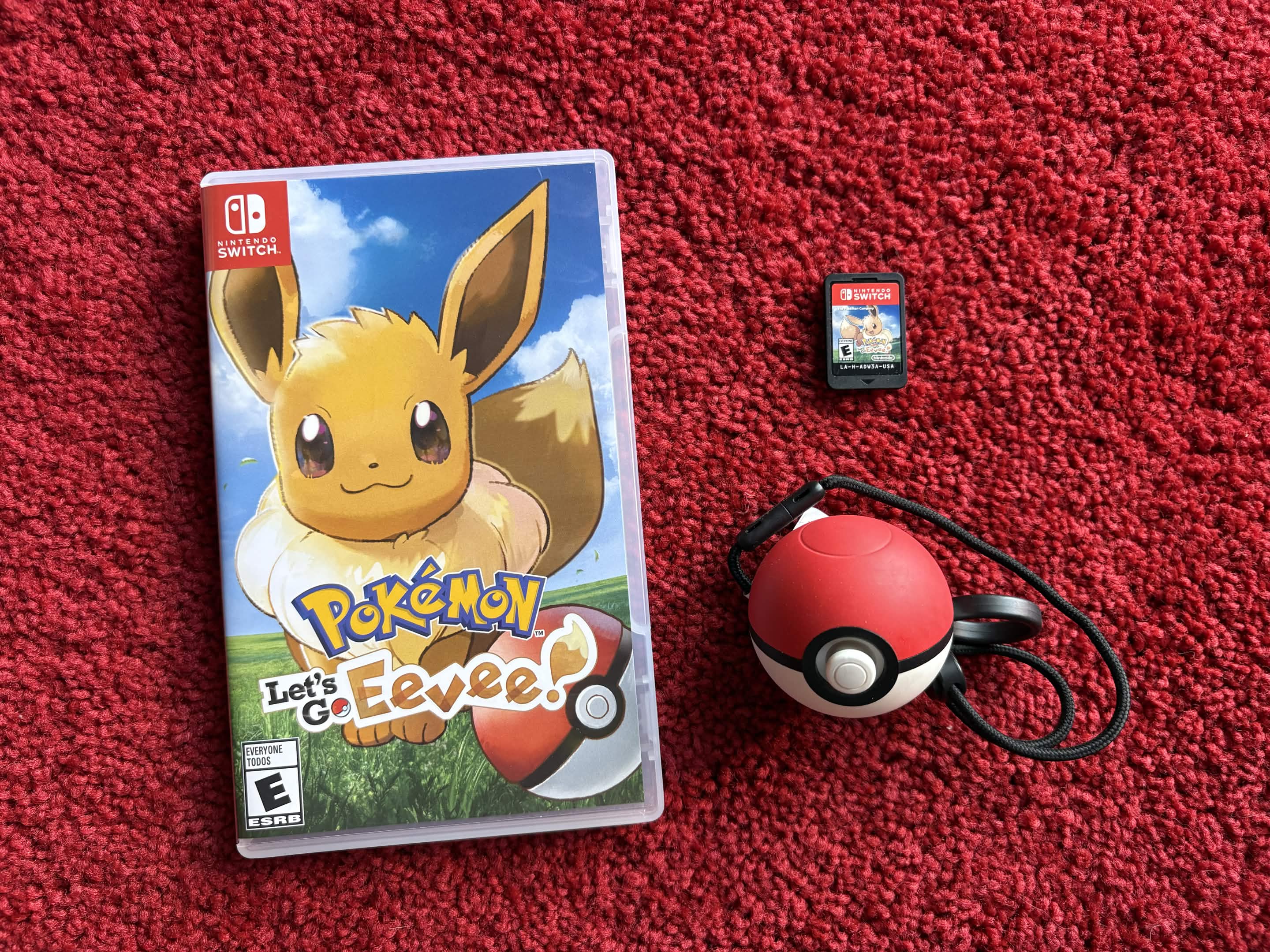
I unintenionally played this game a little early, in between my generation four and five experiences, because it was around that time that I acquired a Poké Ball Plus and wanted to make sure it had an authentic Mew contained therein. In fact, I had no intention of playing the game at all since I had already played the generation three Kanto remakes, and the Let's Go games don't have the greatest reputation in the fan community. By this time, I learned that the meta opinions of the community should not be taken seriously, because this game is so enjoyable and fun.
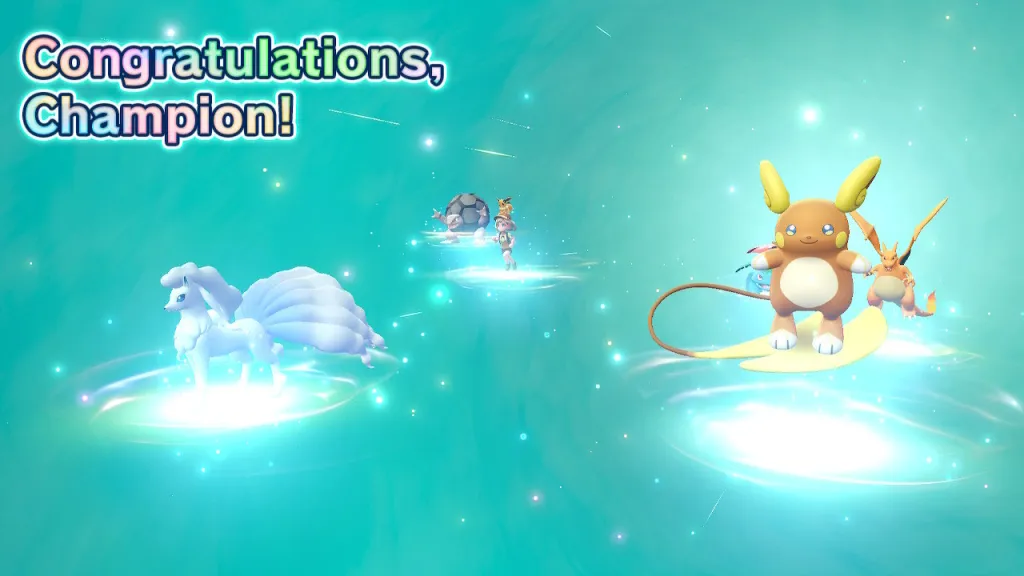
My Let's Go Eevee Champions

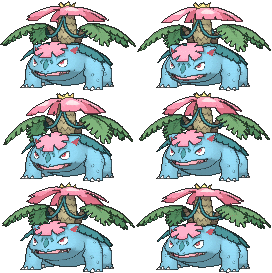
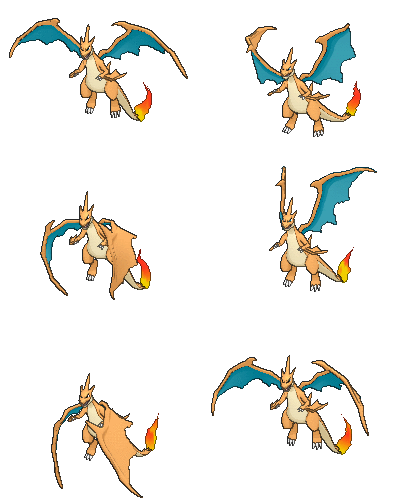


I want to discuss the control options here, since I feel like I spent a lot of time in frustration trying to catch certain Pokémon. If you want the short version of this: use handheld mode! I started off playing with the Poké Ball Plus as a controller, since it took me a long time to find one that was a good price from a seller I felt I could trust. The main issue is that this device only has two buttons: the top button and the button that is depressed when you click in on the joystick. This means that you cannot access all the functionality of the menus in the game. After a few hours, I decided to switch over to using a Joycon while still keeping the game in television mode. This allowed me to have access to all of the menu functionality, but it was still very hard to catch certain Pokémon, especially if they move around a lot. The whole throwing mechanic is just not easy to master, and it was common for me to throw away a lot of Poké balls.
Unfortunately, I did not figure out until I was mostly done with the game that capturing Pokémon in handheld mode is a total breeze. Once you click "Ready," the center of the capture area locks in to whatever direction you are pointing your Switch console, so you just need to move it around in space and center the Pokémon to get higher level throws. Using this in combination with certain berries almost trivializes the capture game. For me, it kind of stinks because I like to play in television mode, but it's just not worth the frustration.
I want to say that I still love the Poké Ball Plus, and I think it was worth it to acquire one. It was nice to get another legitimate Mew, but the Let's Go functionality also makes leveling up and acquiring candy very fast. I already owned a Pokémon GO Plus+ device, which works a little bit better since it autocatches while the Poké Ball Plus requires you to click the button for each catch. The former also let's you use Great Balls and Ultra Balls with button presses, while the latter does not (the former is also more flat, making it easier to store in a fanny pack or pocket). However, sending the Pokémon for a walk is really fun because they can actually call out to you randomly if you have the audio turned on, basically asking you to play with them inside the ball for bonus items and experience.
When they return to the Switch after spinning and catching in Pokémon GO for even a couple of hours, they rack up tons of experience points and candy. I could typically take a Pokémon out with me to work (I will admit, I work on a campus where there are lots of stops and Pokémon spawning), and by the time I got home, the Pokémon could jump up 10 or more levels (sometimes as many as 30 if they started off real low). The other nice addition is that the Pokémon can still learn their level up moves when you bring them back. Back in the Pokéwalker days, you had to be careful not to reach a level in the device where you needed to learn a move, because you could not learn it. You also could not gain more than a single level on a walk back then, making it an unviable leveling method.
My playthrough of Pokémon X
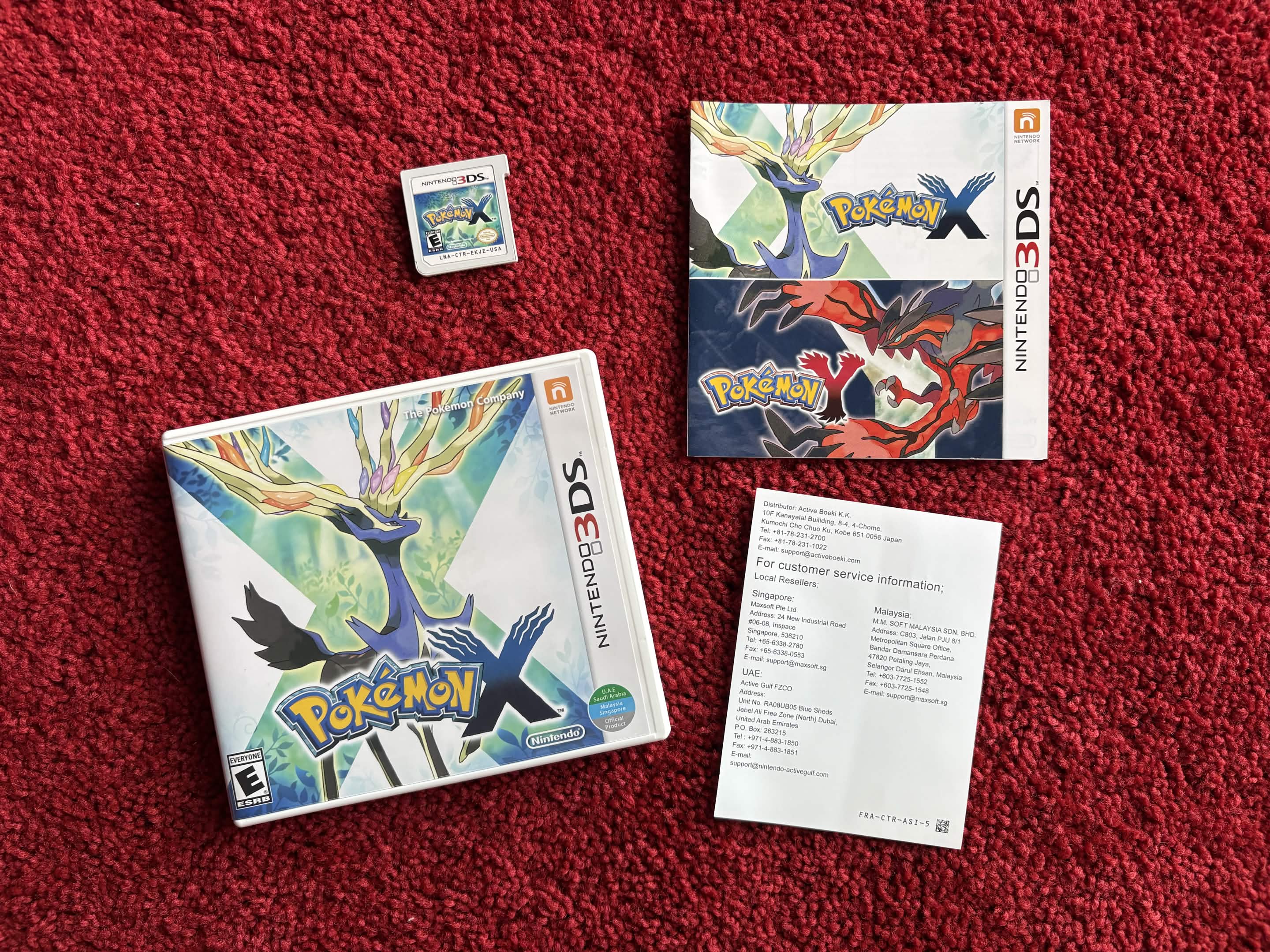
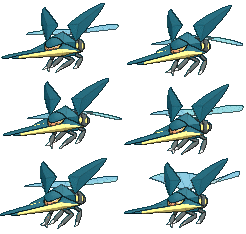
By the time I got to the Nintendo 3DS titles in 2025, I was relieved that I could purchase copies online at retail prices and still sealed. The copy of X that I purchased is actually a release that is marked for United Arab Emirates, Saudi Arabia, Malaysia, and Singapore, but it works just fine on my North American 3DS XL. I have read online that such copies will not play on a stock Japanese console, but I am not able to test this since my Japanese New 3DS has been jailbroken (thus it is not region locked anymore). I started my game on the Japanese console so that I could catch an Elegant patterned Vivillon.
My X Champions
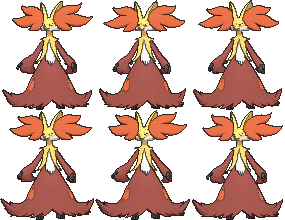


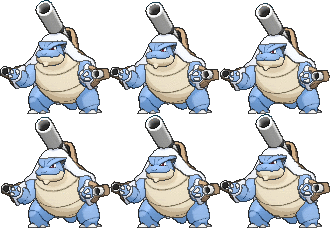
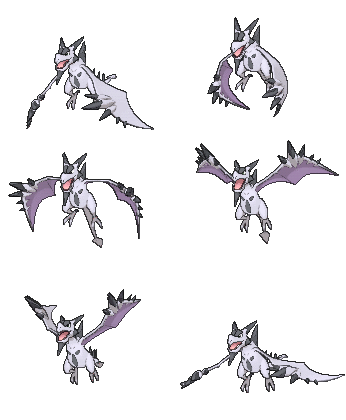
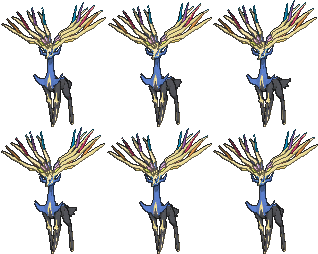
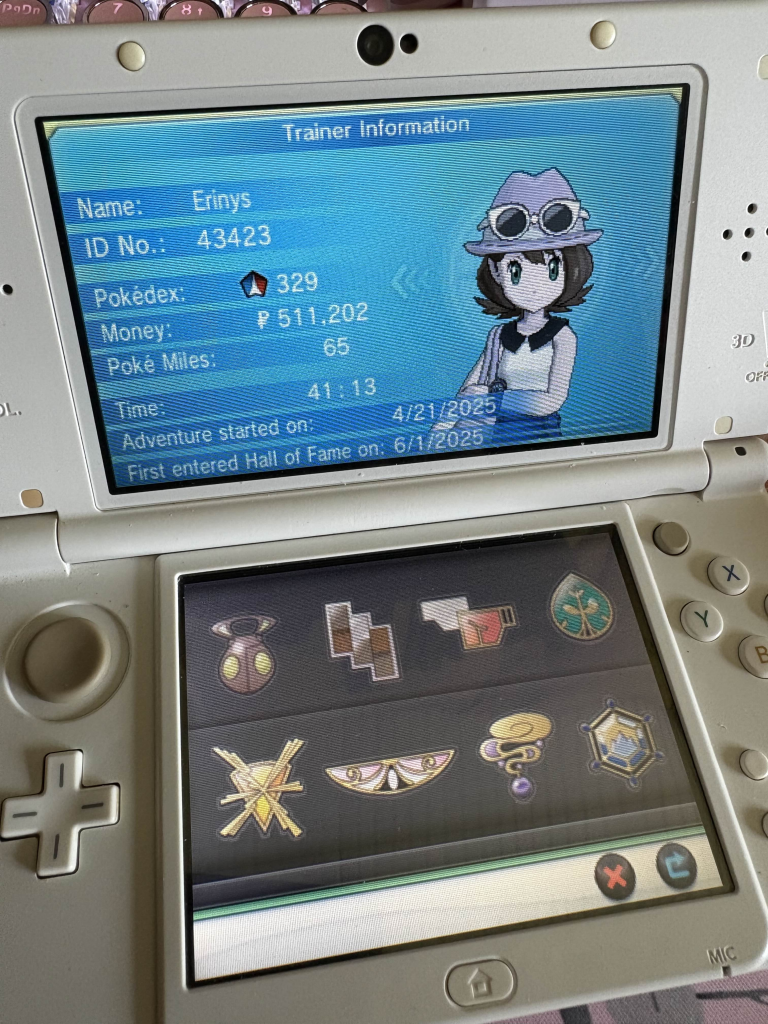
Aside from my Let's Go Eevee experience outlined above, generation six represented the first instance where I reached the end of the base game tremendously overleveled, making the Elite Four and Champion steamrollable. This has been my experience in all of the games published since this generation. Video games have generally moved to having the challenging aspects relegated to the postgame content so that the main games can be completed more casually without as much planning and effort.
The only frustration I had with this game was trying to navigate Lumiose City. The camera follows the protagnist from behind as you move, so at least for me it was very easy to lose my bearings. On top of that, when first visiting the city, certain areas are off limits, so when I was trying to explore as thoroughly as I could, I would keep automatically getting spun around to be put back on course. It was easy to get disoriented. I ended up having to use a fan-created map to find my way around the city.
My playthrough of Pokémon Moon
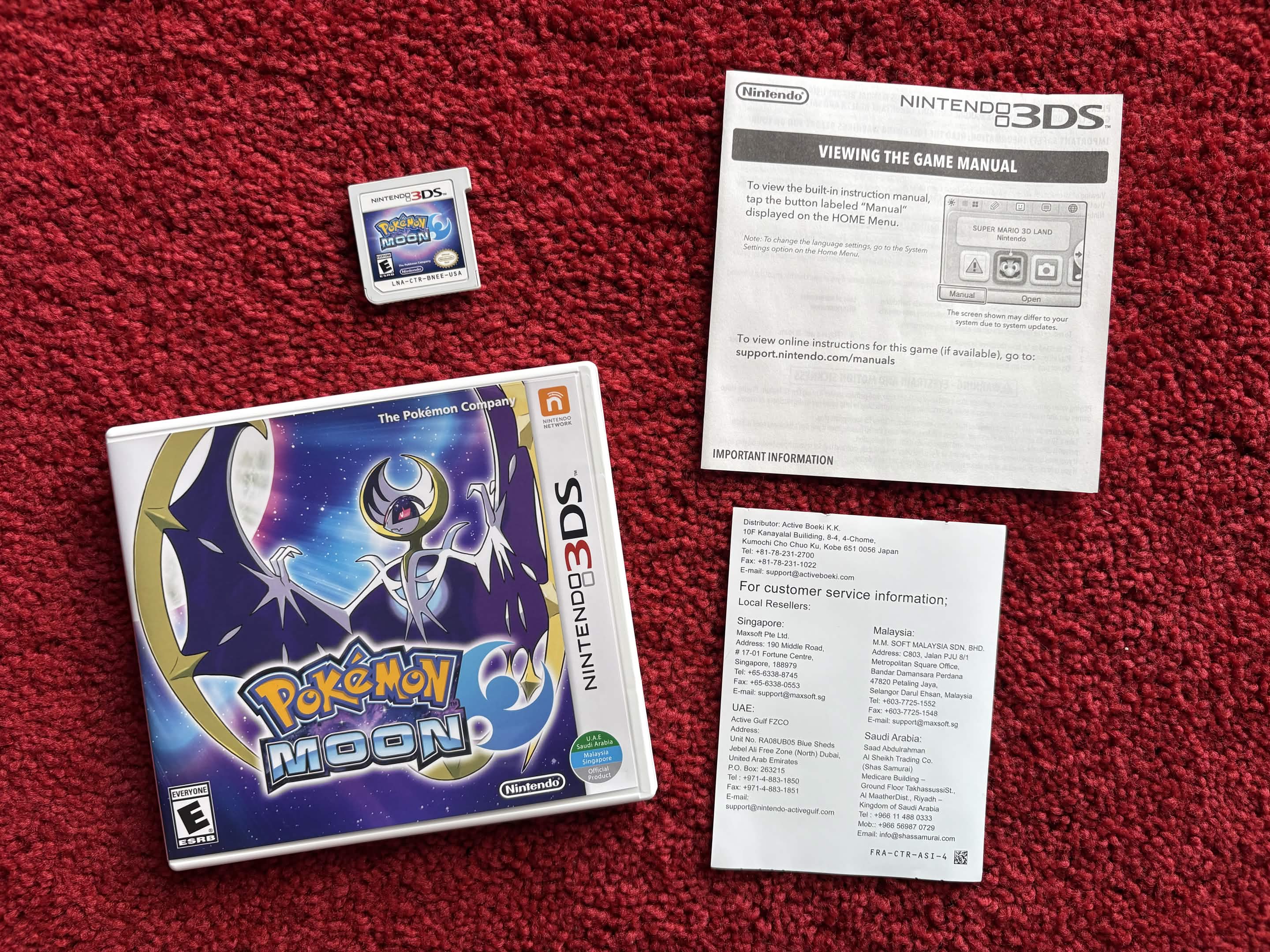
I loved playing this game. I would not say that it's a favorite when comparing it with all of the other titles (maybe middle range overall), but it was just so refreshing to have a gameplay experience that did not repeat all the same tropes from earlier games. The gym crawl was not present, and I felt like there was a greater emphasis on the natural world and trying to live in harmony with Pokémon rather than just capturing them and using them to battle. I also loved the music and the lush landscapes. It was calm and relaxing to settle down and play it. Finally, I believe Lillie is probably my favorite non-player companion character from the entire series. I love that she refuses to battle and is just there to protect and love her Pokémon.
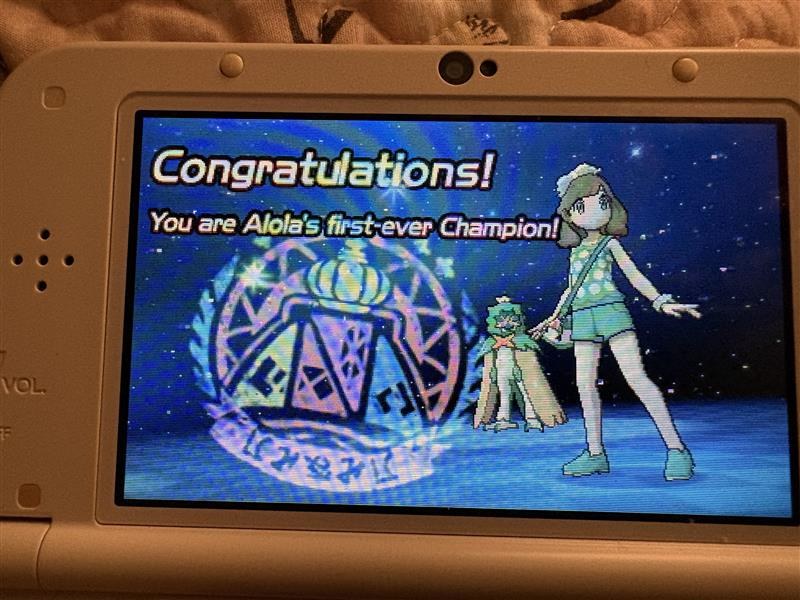
My Moon Champions

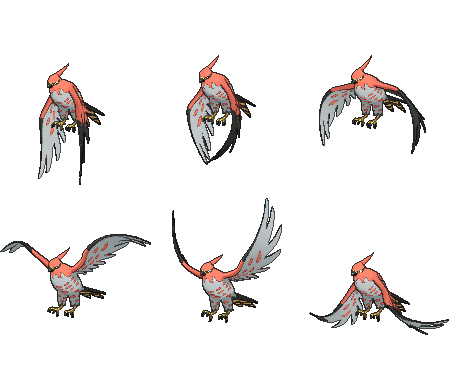



I wish I had played this game when it was new, because I love the Poké Pelago side game content. Obviously I can still go play it whenever I want, but there are just so many games now that I want to visit to do the mundane daily activities that kept people going while they waited for the next release. Acquiring hundreds of berries and sending my Pokémon on excursions was fun and cathartic.
My only gripe with this version in particular is that since I mostly play in the mornings, I experienced most of the game in the dark. The Moon version features nighttime during our real world daytime hours, and the Sun version does the inverse. I still do not regret my overall choice because I like Lunala much more than Solgaleo and I have also been sort of goth-adjacent since middle school. I just wish that I had been able to experience the game in more vivid daylight while still gaming during the normal hours that I like to game. It also felt stressful to try to collect all of the Zygarde cells since some are only available during the opposing daytime cycle. I had to put physical reminders at my desk so that I could remember to open the game at night and grab the cells I missed.
What is next?
I have to come back to both X and Moon because I simply stopped playing after the initial credits rolled. I was still focused on getting through one of each generational title so that I could get caught up to the modern games and acquire things that are temporarily available. I plan to play Pokémon Ultra Sun so that I can get the opposing exclusive as well as the extra story and Pokémon that were made available in those Ultra enhanced editions (as well as more Alola in the sunshine, read above). I will also eventually play at least one of the Hoenn remakes, but that is probably farther in the future after I make greater progress on my ribbon master and living origin dex. The same goes for Pokémon Y. I would really just be playing it to get Yveltal, which is not very appealing, so it may take a while before I get motivated to do that. Sorry to the Yveltal lovers.